



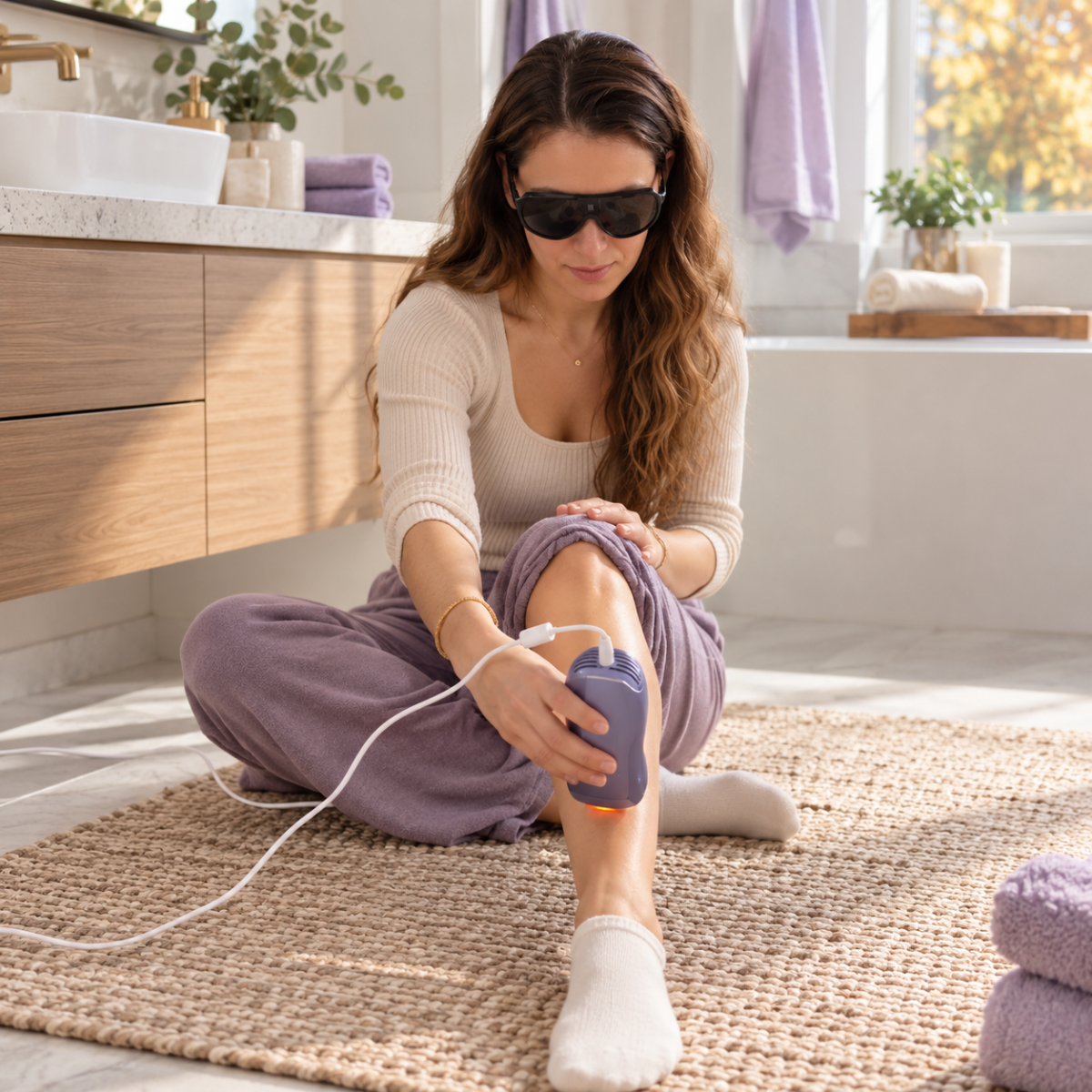
Does Cold Weather Affect IPL Hair Removal?

No, cold weather does not make IPL hair removal less effective. IPL targets pigment in the hair, so hair and skin colour, device settings, preparation and treatment consistency have a much greater influence on results. Colder weather can still affect your routine, particularly if your skin becomes dry or irritated.
Does cold weather affect IPL hair removal?
Not directly. The temperature outside does not determine how well IPL targets hair. IPL uses broad-spectrum light that is absorbed by pigment in the hair and converted into heat around the follicle.
Instead, factors such as your hair and skin characteristics, device suitability, treatment setting, preparation and treatment frequency have a greater influence on IPL results.
There is no reason to increase the intensity because temperatures have fallen. Use the setting recommended for your device and treatment area, or the level established through its skin-testing procedure.
If a flash becomes sharply painful or your skin reacts more strongly than expected, stop treatment and follow the manufacturer's advice.
For more on the treatment mechanism, see our guide to [how IPL works and why skin tone matters].
Can you use IPL when it is cold outside?
Yes, you can use IPL when it is cold outside if your device is suitable for you and your skin is suitable for treatment. There is no need to stop your routine simply because autumn has arrived or temperatures have dropped.
What can change during colder months is the condition of your skin. Cold air, wind and indoor heating can contribute to tightness, flaking and irritation. Hot showers and frequent washing can make dryness worse.
Mild dryness does not automatically make IPL unsuitable. Cracked, raw, inflamed or significantly irritated skin should be left to recover before treatment.
If your skin becomes dry, continue with a moisturising routine using products you already know your skin tolerates. Before IPL, follow your device's preparation instructions and make sure the treatment area is clean and completely dry.
Can you use IPL on dry winter skin?

Mildly dry skin does not automatically rule out IPL, but cracked or irritated skin should be left to recover first. The condition of the treatment area matters more than the temperature outside.
Slight flaking or tightness may be manageable if the skin remains intact and comfortable. Follow the preparation instructions for your device and assess the area before starting.
Cracked, sore or inflamed skin needs more time. Postpone treatment until the area has recovered rather than flashing over damaged skin because a session is due.
Sunburned, peeling or tender skin should not be treated with IPL. Recent tanning or a noticeable change in skin colour also warrants a check of the device's instructions before you continue.
Regular moisturising can remain part of your normal winter skincare routine. Make sure the product has been removed if your device's instructions require clean, product-free skin before treatment.
Do you need to warm your skin before using IPL?
No, there is no universal waiting period simply because you have come in from the cold. You do not need to wait for your skin to reach a particular temperature before using your device.
A quick check of the treatment area is more useful. Look for redness, chapping, soreness or irritation after being outside.
Skin that looks and feels normal can be treated according to the device's usual preparation instructions. Areas that remain red, sore, chapped or irritated should be given time to settle.
There is no need to create a separate winter warm-up routine. The aim is simply to make sure the skin is suitable for IPL before you start.
Should you change your IPL setting in colder weather?
No. Cold weather is not a reason to increase or decrease your IPL intensity. Follow the setting recommended by your device for your skin tone and treatment area.
Some devices use skin-tone sensors, while others require a patch or skin test before treatment. Use these features according to the manufacturer's instructions rather than making seasonal adjustments yourself.
Adding extra flashes or repeatedly treating an area is not a substitute for using the correct setting. Stick to the device's recommended coverage and treatment frequency.
Does winter sun affect IPL hair removal?
Yes, winter sun can still matter for IPL, particularly if your skin has tanned. Cooler temperatures do not remove the need to consider UV exposure.
Bright autumn and winter days can still expose the skin to UV. Holidays, skiing trips and travel to sunnier destinations can also involve considerably more exposure than a typical day at home in the UK.
Tanning changes skin pigmentation, which can affect how the skin responds to IPL. Sunburned skin should not be treated, and redness, heat, tenderness, peeling or blistering are reasons to wait until the area has healed.
Waiting periods after sun exposure or tanning vary between IPL devices. Follow the guidance for your exact model, including any requirements for waiting or repeating a skin test.
For more detail, see our guide to [using IPL after sun exposure].

Can you keep using IPL throughout autumn and winter?
Yes. If your device is suitable and your skin remains suitable for treatment, continue with the manufacturer's recommended schedule. A change in season does not require a different treatment frequency.
A quick check before each session is enough:
Is the skin clean and completely dry?
Is it intact and comfortable?
Has there been recent sun exposure or tanning?
Are you using the recommended setting?
Are you following the treatment schedule?
Have you followed the preparation instructions for your device?
If the skin is irritated or has changed significantly after sun exposure, postpone treatment until it is suitable again.
What should you check before using IPL in cold weather?
Check your skin, recent sun exposure and device settings before each session. The temperature itself does not need to become another variable in your IPL routine.
Start with the treatment area. It should be clean, completely dry, intact and comfortable.
Recent sun exposure or tanning is another consideration. If your skin has changed colour, check the manufacturer's guidance before treating it.
Your device setting should match the instructions for your skin tone and treatment area. Continue to follow the recommended schedule rather than adjusting it for the season.
Finally, check the preparation and aftercare instructions supplied with your device. Manufacturer guidance takes priority because different IPL devices have different requirements.

Before treatment
Is the treatment area clean and completely dry?
Is the skin intact and comfortable?
Is there any active irritation, chapping or broken skin?
Have you had recent sun exposure or developed a tan?
Are you using the recommended setting?
Are you following the treatment schedule?
Have you followed your device's preparation instructions?
If everything looks normal, continue with your usual routine. A change in skin condition or pigmentation is a reason to check the device guidance before treating the area.
FAQs on Cold Weather and IPL
Does cold weather affect IPL hair removal?
Not directly. Cold weather does not change how IPL targets pigment in the hair. Device suitability, hair and skin characteristics, treatment settings, preparation and consistency have a greater effect on results.
Can you use IPL in winter?
Yes. IPL can be used during colder months when the device is suitable for you and your skin is clean, dry and intact. Recent tanning or sun exposure should also be considered according to the manufacturer's instructions.
Can you use IPL on dry skin in winter?
Mild dryness does not automatically rule out treatment. Cracked, sore, inflamed, peeling or otherwise damaged skin should not be treated until it has recovered.
Do you need to warm your skin before IPL?
No specific warm-up period applies simply because it is cold outside. After coming in from the cold, check for redness, chapping, irritation and discomfort. If the skin is normal, clean and dry, follow your device's usual instructions.
So, does cold weather affect IPL hair removal?
Not in the way that hair and skin pigment, device settings, preparation and consistency do. Cold temperatures do not change how IPL targets hair.
The practical considerations are simpler: look after dry or irritated skin, pay attention to tanning and sun exposure, and continue following the instructions for your device.
There is no need to create a separate cold-weather IPL routine or change the intensity because the temperature has dropped. If your skin is suitable and your device's guidance allows treatment, your usual schedule can continue.
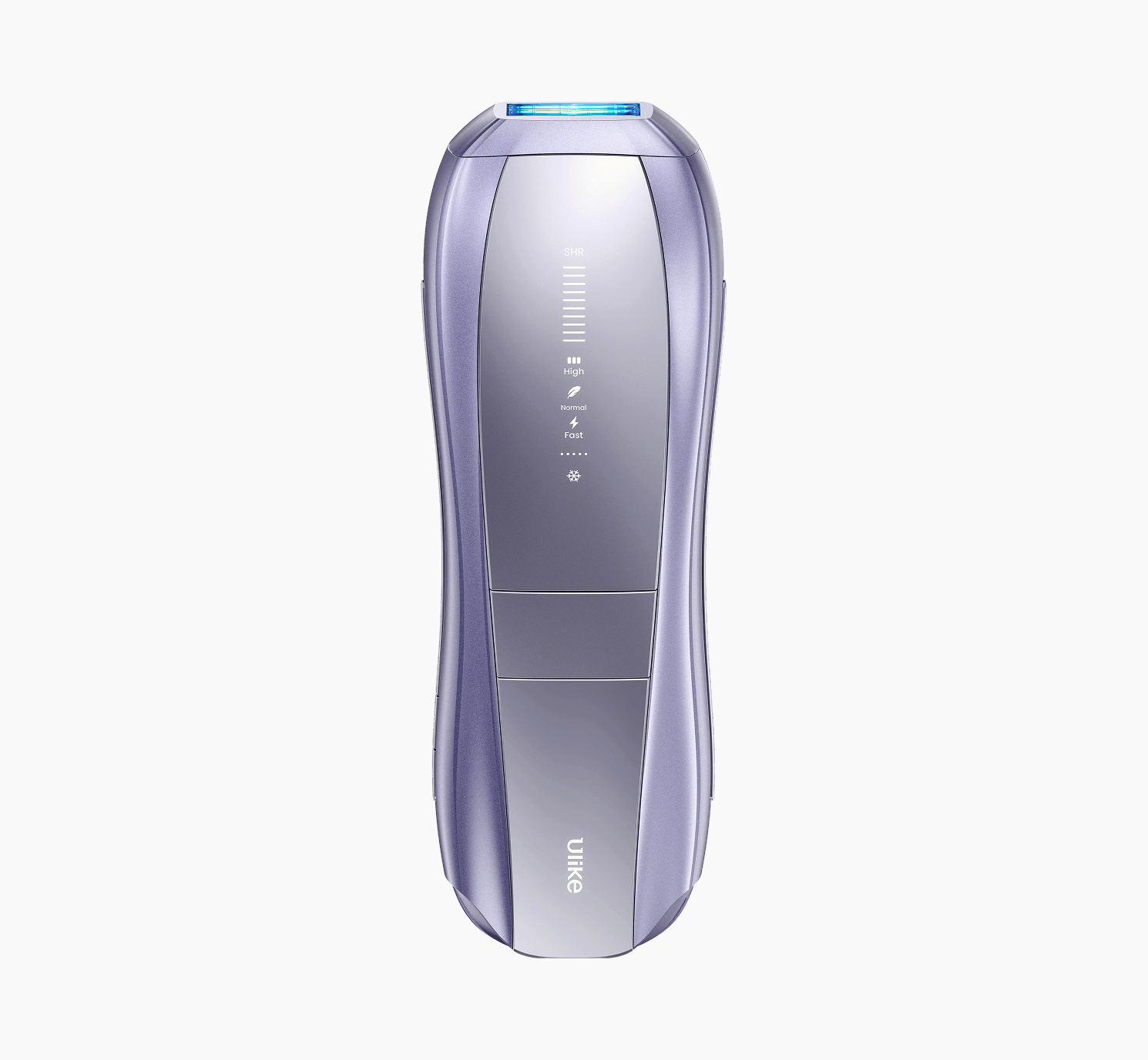
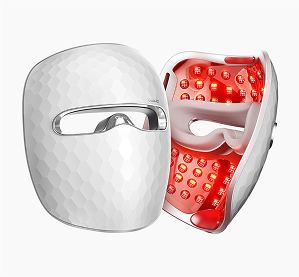
Thinking about starting or upgrading your at-home IPL routine? Take a look at the Ulike IPL range and compare the features that matter for your skin tone, treatment areas and preferred routine before choosing a device.
Can You Use IPL on Stretch Marks? Old vs New Marks
Can You Use IPL on Freckles? | Safety & Hair Removal
Can You Use IPL on Your Face Every Day? How Often Should You Use It?
Explore Beauty
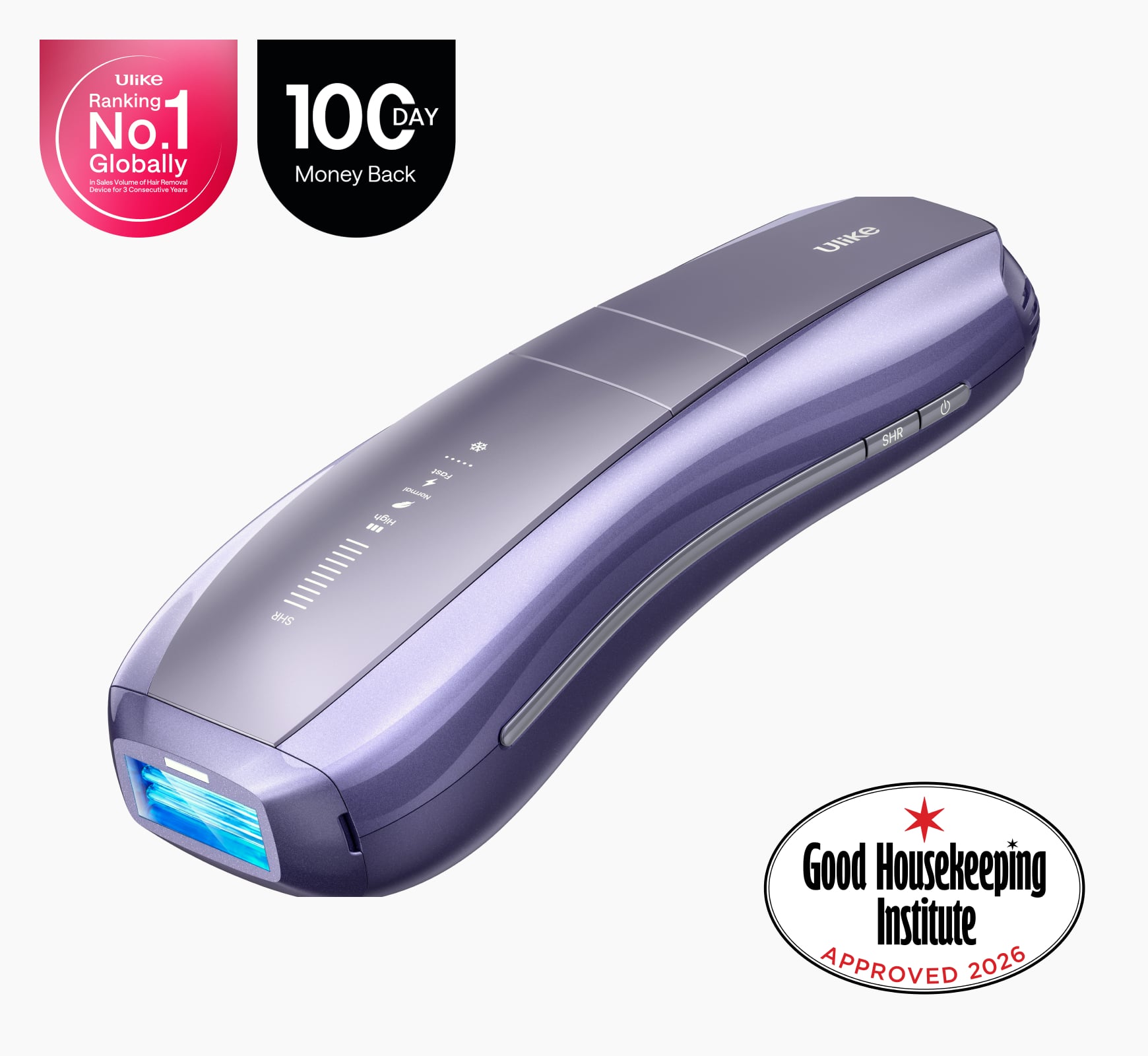
Ulike Air 10
2 weeks to silky smooth skin.
96% Hair Density Reduction in 2 Weeks
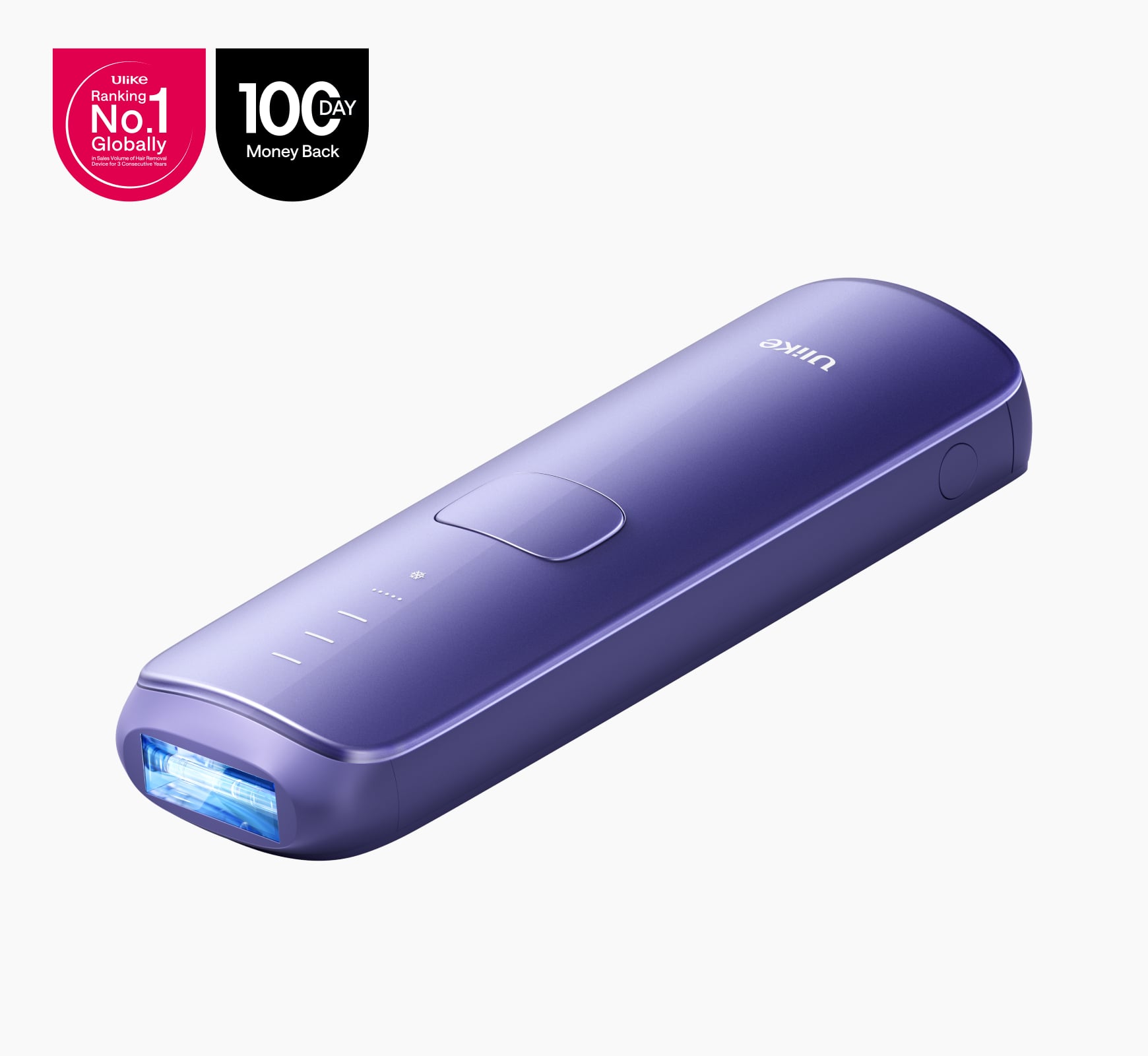
Ulike Air 3
3 weeks to silky smooth skin.
93% Hair Density Reduction in 4 Weeks
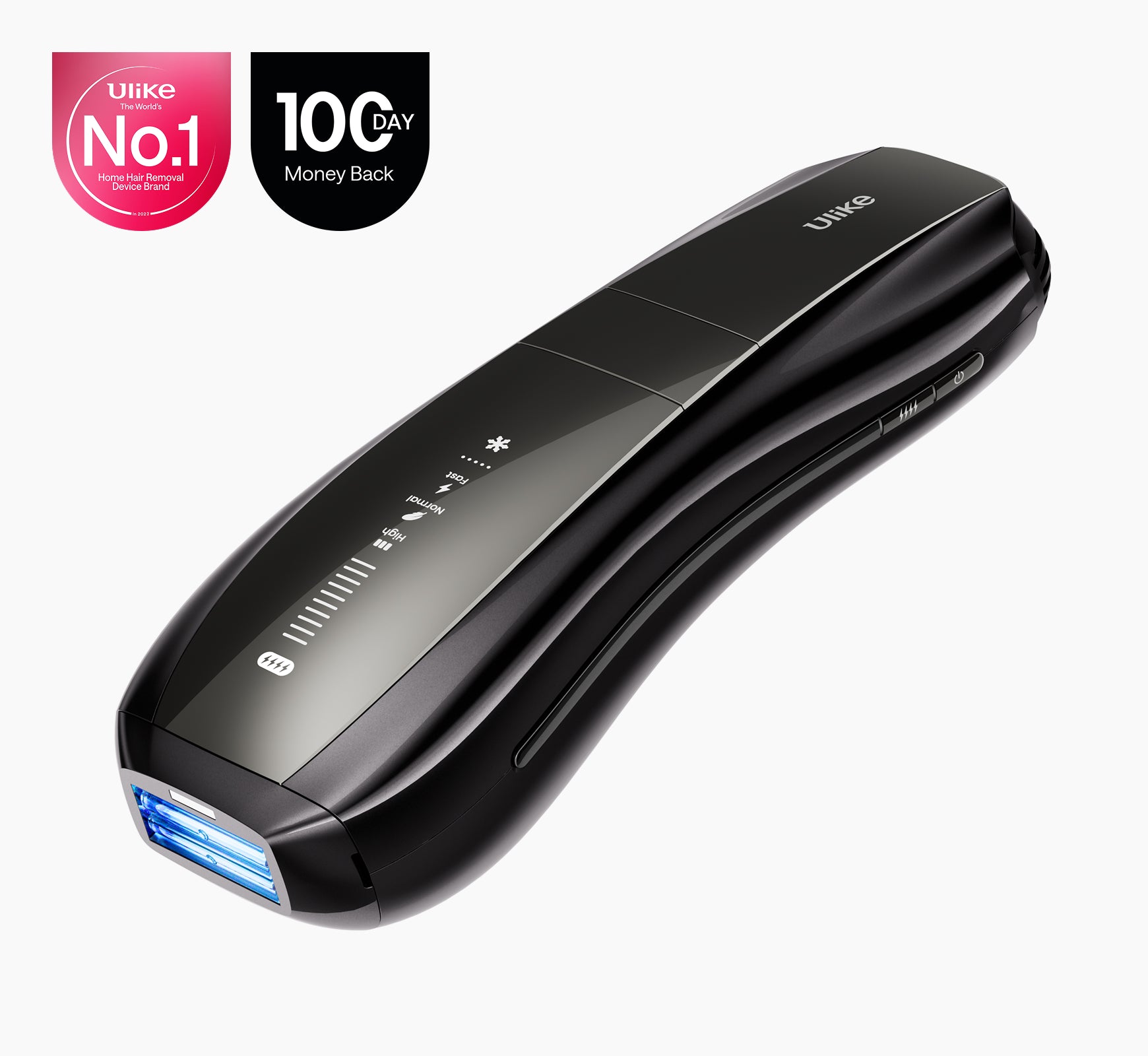
Ulike X
3 weeks to silky smooth skin.
94% hair reduction in just 2 weeks*
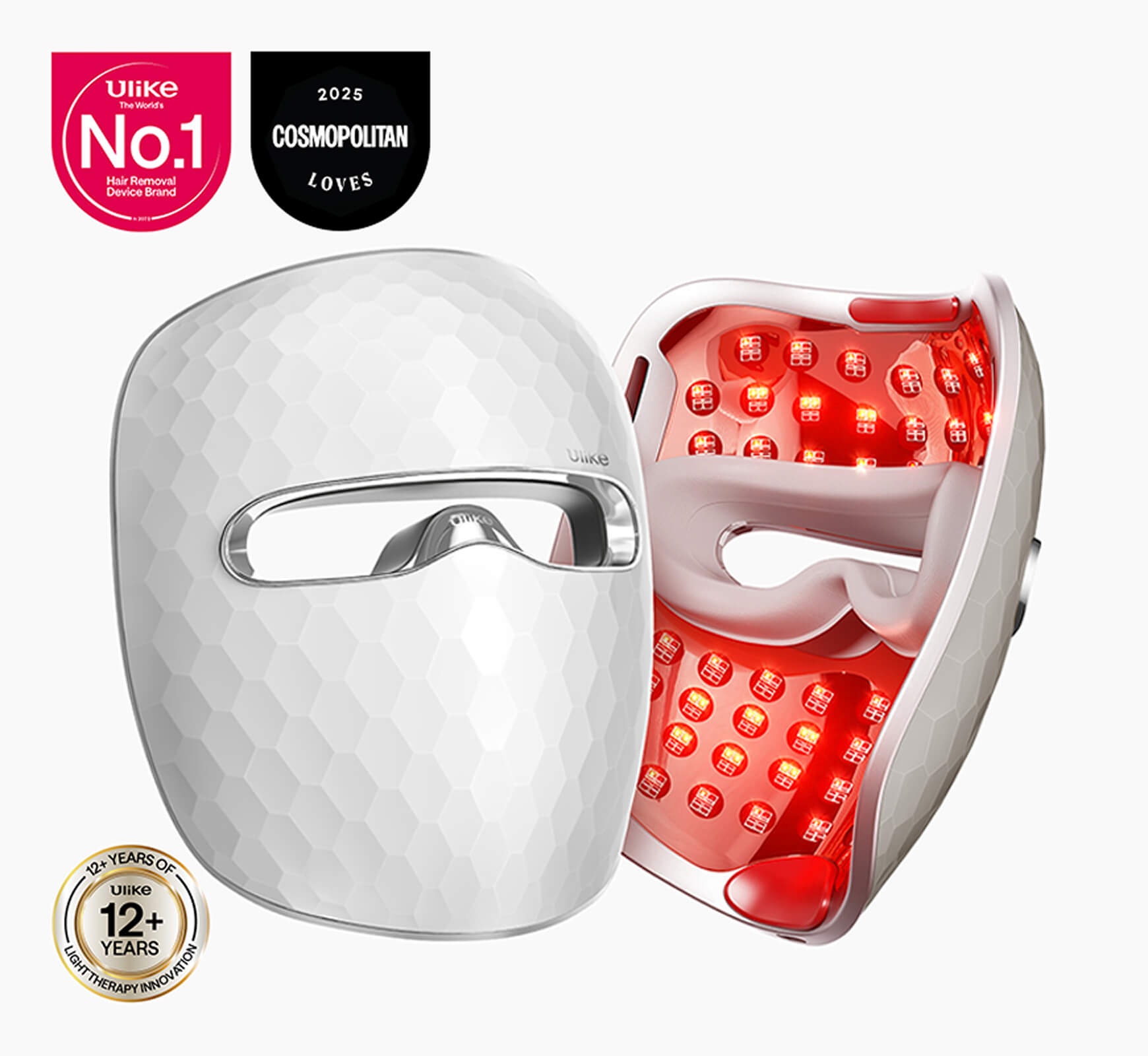
Ulike Reglow
Clearer skin in 2 weeks: Fewer breakouts
Smoother skin in 4 weeks: Fewer lines, firmer feel