




Personal Care Products That Fit Real Routines UK
Personal Care Products Worth Adding to Your Routine This Year

There’s usually one part of a routine that starts to feel repetitive before anything else.
Often it’s hair removal. Something that needs doing again, just as you’ve finished dealing with it. It’s quick at first, then less so over time. Easy to put off, but slightly annoying when you do.
The rest tends to follow a similar pattern. A few basics that stay consistent. Cleanser, moisturiser, SPF. Then, there are a handful of things that come and go depending on how much time you have that week.
Personal care products are items used to maintain hygiene, support skin health, and manage grooming as part of a daily or weekly routine. The category includes skincare staples such as cleansers and moisturisers, hair removal methods ranging from traditional waxing to at-home IPL devices, and, increasingly, technology-led skincare tools such as LED face masks. In recent years, the personal care category in the UK has expanded significantly to include at-home devices that were once only available through professional clinics.
What’s changing isn’t just the number of options. It’s the way people are starting to approach them. Less interest in keeping up with everything. More attention on what actually reduces the amount of effort over time.
This guide looks at those shifts more closely. What’s available, how it works, and where it might fit if you’re rethinking parts of your routine.
What “Personal Care” Actually Means in 2026
Personal care used to centre mostly on skincare and basic grooming. That’s still there, but it’s no longer the full picture. Things like hair removal and skin treatments now sit closer to the same space, especially with more options available to use at home.
A routine doesn’t always follow a set structure either. Some keep it very simple and leave it at that. Others add things slowly, usually when something starts to feel inconvenient or too time-consuming to keep repeating.
Skincare tends to stay as the baseline. Everything else moves around it. Hair removal is often the part people look to change first, mainly because it’s the least predictable in terms of upkeep.
At-home devices have become part of that shift. Not for everyone, but enough to change how routines are put together. What used to mean booking appointments can now be handled in your own time, which changes the way people think about maintaining results.
Nothing here replaces what already works. It just widens the set of options. What stays in a routine usually comes down to what feels manageable to keep doing.
The Building Blocks of a Personal Care Routine
Most routines start with the same few things. A cleanser that doesn’t irritate your skin. A moisturiser that does its job without much thought. SPF in the morning, when you remember it.
That part tends to stay fairly steady. It’s everything around it that shifts.

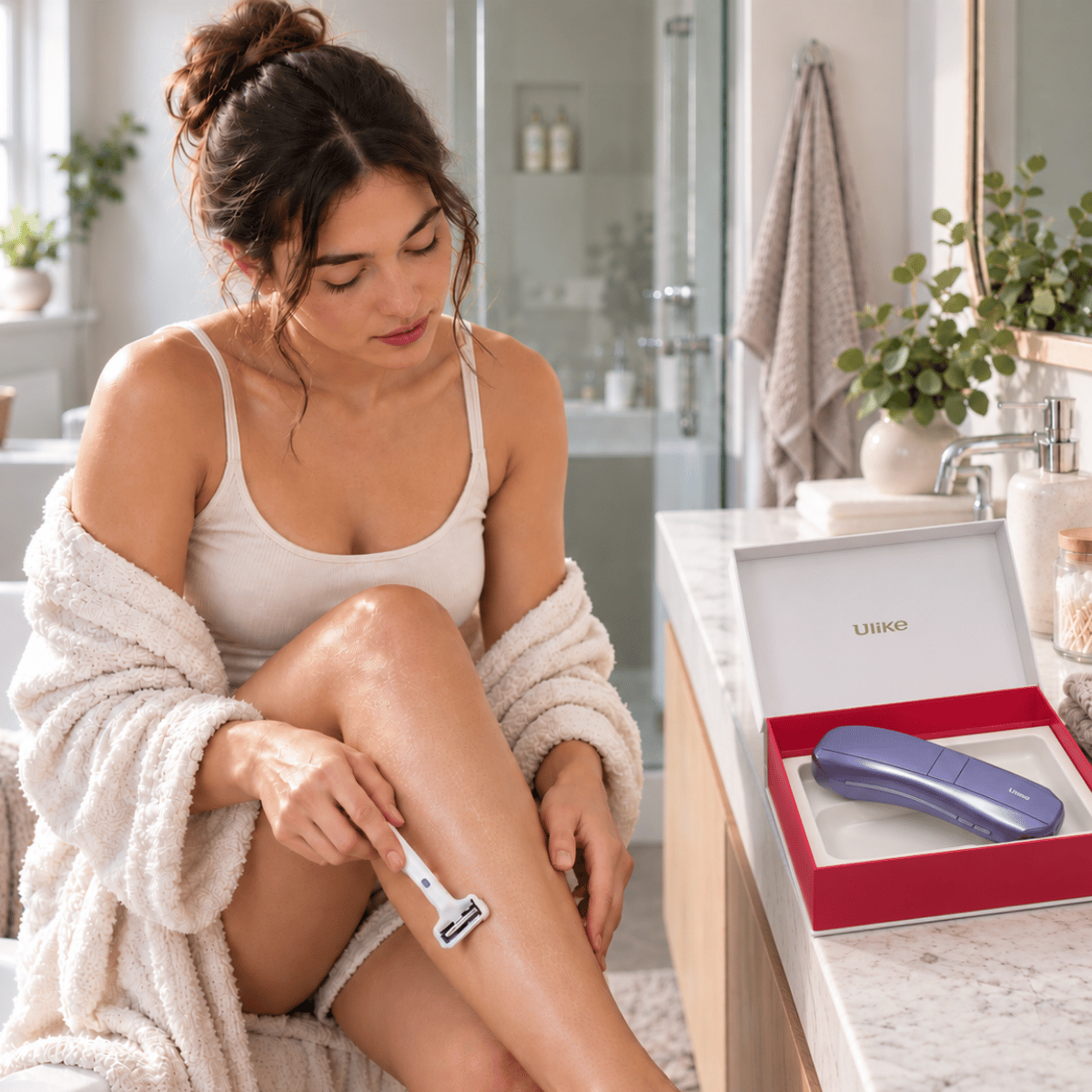
Hair removal is usually where routines start to feel less consistent. Shaving is quick but doesn’t last. Waxing and threading hold for longer, but they come with more effort, or the need to plan ahead. It often ends up being the part people put off, then come back to.
Body care sits somewhere in the middle. Sometimes it’s just moisturiser after a shower. Other times it includes exfoliation, or a bit more attention when skin feels dry or uneven. It changes depending on the week.
Devices have started to find a place in some routines as well. Not as a replacement for skincare, but as something that works alongside it. The results aren’t immediate, which is partly the point. They’re used more for what happens over time, rather than what you see straight away.
Most routines aren’t as structured as they look. A few things stay in place. The rest moves around them. What ends up sticking is usually whatever feels manageable to keep doing, even on a busy week.
Hair Removal Options: What’s Changed and What’s Worth Knowing
Hair removal tends to be the part of a routine that circles back the quickest.
Shaving is easy to reach for. It takes a few minutes and does the job, but the regrowth doesn’t take long either. Waxing and threading last longer, though they usually need more effort or a bit of planning. It’s not difficult, just repetitive.
Clinic laser has been the longer-term option for a while. It works by targeting the follicle with light over a series of sessions. Results can be steady, but it asks for time, appointments, and a level of commitment that doesn’t always fit around everything else.
At-home devices have started to change how people approach that.
IPL is the one most people come across first. It uses pulses of light that focus on the pigment in the hair. Over time, that affects how the hair grows back. Not all at once, and not immediately, but gradually.
The differences tend to show up in a few practical ways:
-
Time: short sessions at home instead of scheduled appointments
-
Cost: more upfront, less spent over time
-
Routine: depends on keeping sessions regular rather than booking ahead
Miss a few sessions and progress slows. Stay consistent and it builds, almost in the background.
Most comparisons with clinic treatments come down to preference. Some people would rather have it done for them. Others prefer handling it themselves, when it suits them, without needing to work around availability.
How IPL Devices Work: A Plain-Language Explanation
IPL device sends out pulses of light. That light is absorbed by the pigment in the hair, which creates a small amount of heat. Over time, that heat affects how the follicle produces new hair.
It’s the same general idea behind clinic treatments, just delivered differently. Laser uses a single, concentrated wavelength. IPL works across a broader range of light, which makes it suitable for use at home.
The detail can feel slightly abstract at first. It usually makes more sense once you’ve seen how it plays out over a few sessions.

Most people notice changes gradually rather than all at once:
-
Early sessions focus on hairs that are actively growing
-
A visible reduction often shows after around 4 to 6 sessions
-
More consistent results tend to build over 8 to 12 weeks
This links back to the natural hair growth cycle. Not every hair is in the same phase at the same time, so it takes a bit of repetition before everything is affected.
Safety features are built into most modern devices, which helps take some of the uncertainty out of using them at home:
-
Skin tone sensors that adjust the intensity automatically
-
Different modes to make the process feel more comfortable
-
Built-in limits that guide how the device is used
It’s not a fast process, and it isn’t meant to be. The change happens in the background, session by session, until the routine starts to feel lighter overall.
Modern Skin Care Devices: Beyond Moisturiser
Skin care hasn’t changed as quickly as hair removal, but it hasn’t stayed the same either.
The basics are still there. Cleanser, moisturiser, SPF. That part tends to hold. What’s shifted is what sits around it, especially for people who want to maintain results rather than keep starting over.
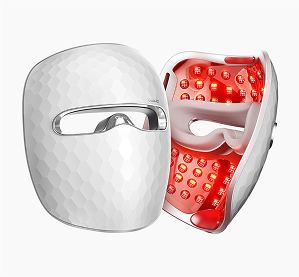
LED masks are one of the more visible additions. They come up often, though not everyone is sure what they actually do.
The idea is fairly simple. Different wavelengths of light are used to support the skin in different ways. Red light is usually linked to improving the look of firmness. Near-infrared goes a bit deeper and is associated with overall skin repair.
There’s quite a lot written about LED light therapy for skin, but most of it comes back to consistency. The effects build gradually, which is why it’s often used alongside a regular routine rather than instead of one.
In practice, the appeal is how easy it is to fit in. Sessions are short. There’s no recovery time. It tends to slot into the evening without much effort.
Devices like the Ulike Reglow LED Mask sit within that space. Not a replacement for skincare, just something that runs alongside it and works in the background over time.
For some, that’s enough to make it worth including. For others, it’s an extra step they’d rather skip. It depends how much you want your routine to do for you, beyond the basics.
Building a Personal Care Routine That Fits Your Life
There isn’t really a fixed version of a routine that works for everyone.
What feels manageable for one person can feel like too much for someone else, especially once time and cost come into it. Most routines end up shaped by what fits into a normal week, not what looks ideal.
Changes tend to happen gradually. Something gets added because it solves a small problem. Something else gets dropped because it’s too easy to skip. Over time, it settles into something that feels workable.
That’s often where at-home devices come in. Not as a full switch, but as a way to ease one part of the routine that keeps repeating. Hair removal is usually the starting point.
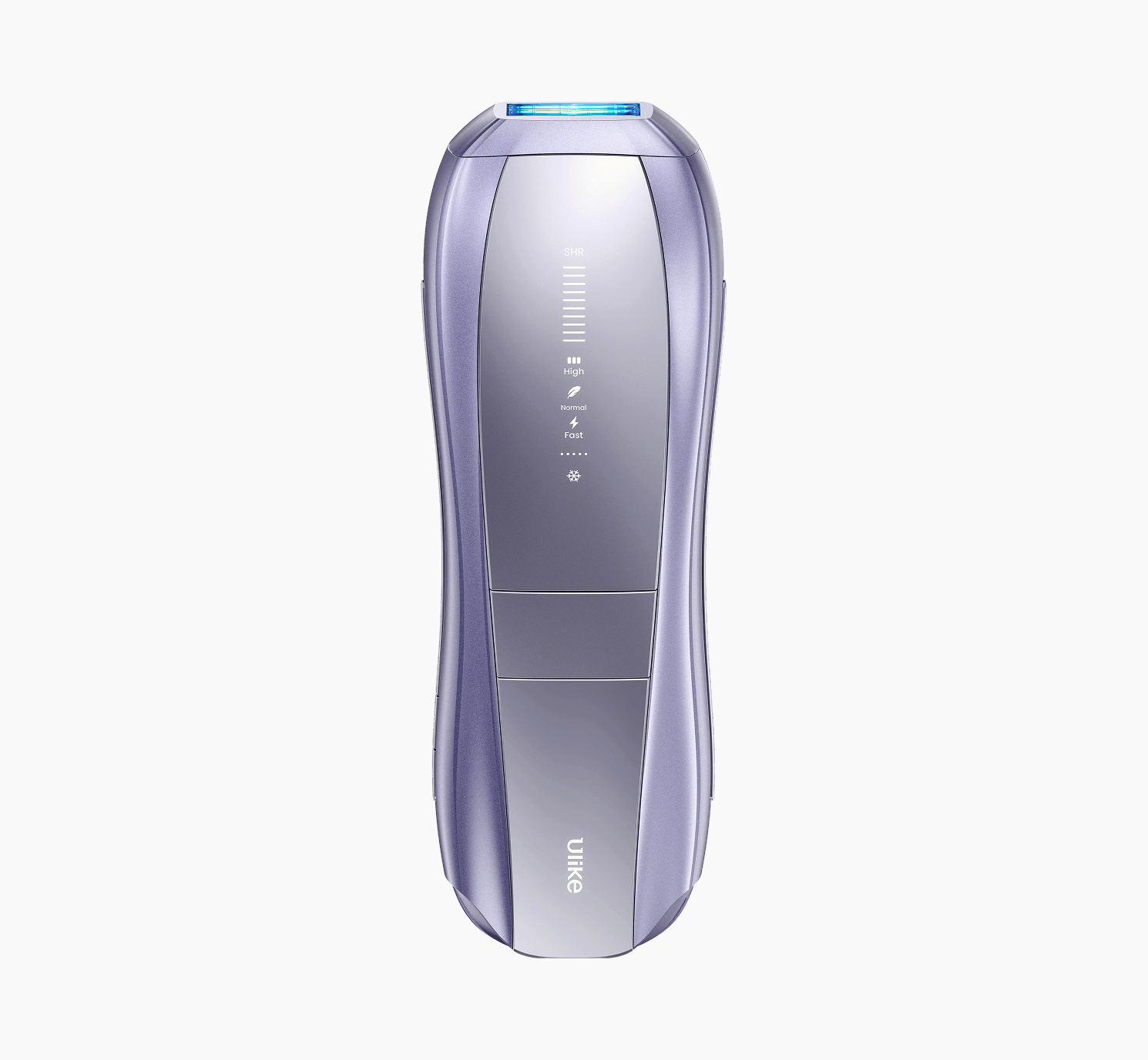
Once you start looking into IPL, a few options come up fairly quickly. The Ulike Air 10 is one of the more advanced devices people consider, especially if comfort during use is a concern. The cooling feature tends to be the detail that stands out.
The Ulike Air 3 sits a bit differently. It’s often where people begin if they’re trying IPL for the first time and want something straightforward to get used to.
Some prefer having one device that covers everything. The Ulike X is designed with that in mind, so it can be used across different areas without needing to switch tools.
None of these change the idea of a routine completely. They just shift how certain parts are handled. Fewer appointments. Less need to keep starting over. A bit more control over when things get done.
Is At-Home IPL Right for You?
IPL suits some people straight away. For others, it takes a bit more thought.
It generally works best within a certain range:
-
Light to medium skin tones
-
Darker hair, where there’s enough pigment for the light to target
Hair with very little pigment, such as grey or red, tends not to respond in the same way. The technology relies on that contrast, so results can be limited.
Most devices now include built-in safety features. Skin tone sensors are fairly standard, adjusting the intensity depending on the area. That tends to make the process feel more straightforward, especially at the beginning.
There are still cases where a bit more caution makes sense. Very dark skin tones, or certain skin conditions, may need a different approach or professional advice first. Some people also look into IPL for sensitive skin or options for darker skin tones before deciding.
Results take time. That part is worth being clear about. IPL reduces regrowth gradually rather than removing it all at once. With regular use, the change becomes noticeable, but it isn’t immediate.
It also doesn’t fully replace maintenance. Occasional sessions are usually needed to keep things consistent.
The timing varies more than people expect. A few sessions might not show much. Then it starts to shift. Knowing roughly how many IPL sessions are needed helps set expectations, but most people adjust as they go.
A Thoughtful Approach to Personal Care
Personal care products are there to support how you choose to look after yourself. They don’t need to become something you feel you have to keep up with.
Some people keep things simple and leave it there. Others look for ways to make parts of their routine last longer or take less effort. Both approaches make sense. It depends what feels manageable.
If you’re looking to ease part of your routine, at-home devices are one place people often start. IPL for hair removal or an LED mask in the evening are options that tend to fit around existing habits rather than replace them.
Ulike’s range sits within that space. You can explore it at your own pace, without changing everything at once.
This Women’s Month, there’s also a dedicated campaign focused on personal care routines. You can take a look here: uk.ulike.com/pages/campaign
No pressure to decide. Just a chance to see what might work for you.
Frequently Asked Questions
What are the most important personal care products to include in a daily routine?
Most routines come down to three essentials: a cleanser, a moisturiser, and daily SPF. These support skin health and are usually enough as a baseline.
Hair removal is often included as needed, with options ranging from shaving and waxing to longer-term methods such as at-home IPL.
Consistency matters more than the number of products used.
Is at-home IPL as effective as professional laser hair removal?
At-home IPL and professional laser use different technologies. Laser uses a single concentrated wavelength, while IPL uses broad-spectrum light.
Both can reduce hair growth long term with consistent use. Laser typically works faster, while IPL requires more sessions but offers greater convenience and lower long-term cost.
How long does it take to see results from an IPL hair removal device?
Most people notice reduced hair regrowth after 4 to 6 sessions, typically within 8 to 12 weeks. Full results develop after 6 to 12 sessions, with maintenance needed. Results vary by hair colour, skin tone, and consistency of use.
Are at-home IPL devices safe for all skin tones?
Most at-home IPL devices include skin tone sensors to support safe use across a range of skin tones. They work best on light to medium skin with darker hair. Very dark skin tones or very light hair may require professional advice, as results can be limited.
What does an LED face mask do for skin?
LED face masks use light to support the skin over time. Red light is linked to firmness and fine lines, while near-infrared works a bit deeper and is associated with repair. It’s a non-invasive treatment that’s usually used alongside a regular skincare routine, not instead of it.
What to Do Between IPL Treatments: Shaving, Exfoliation & Hair Regrowth
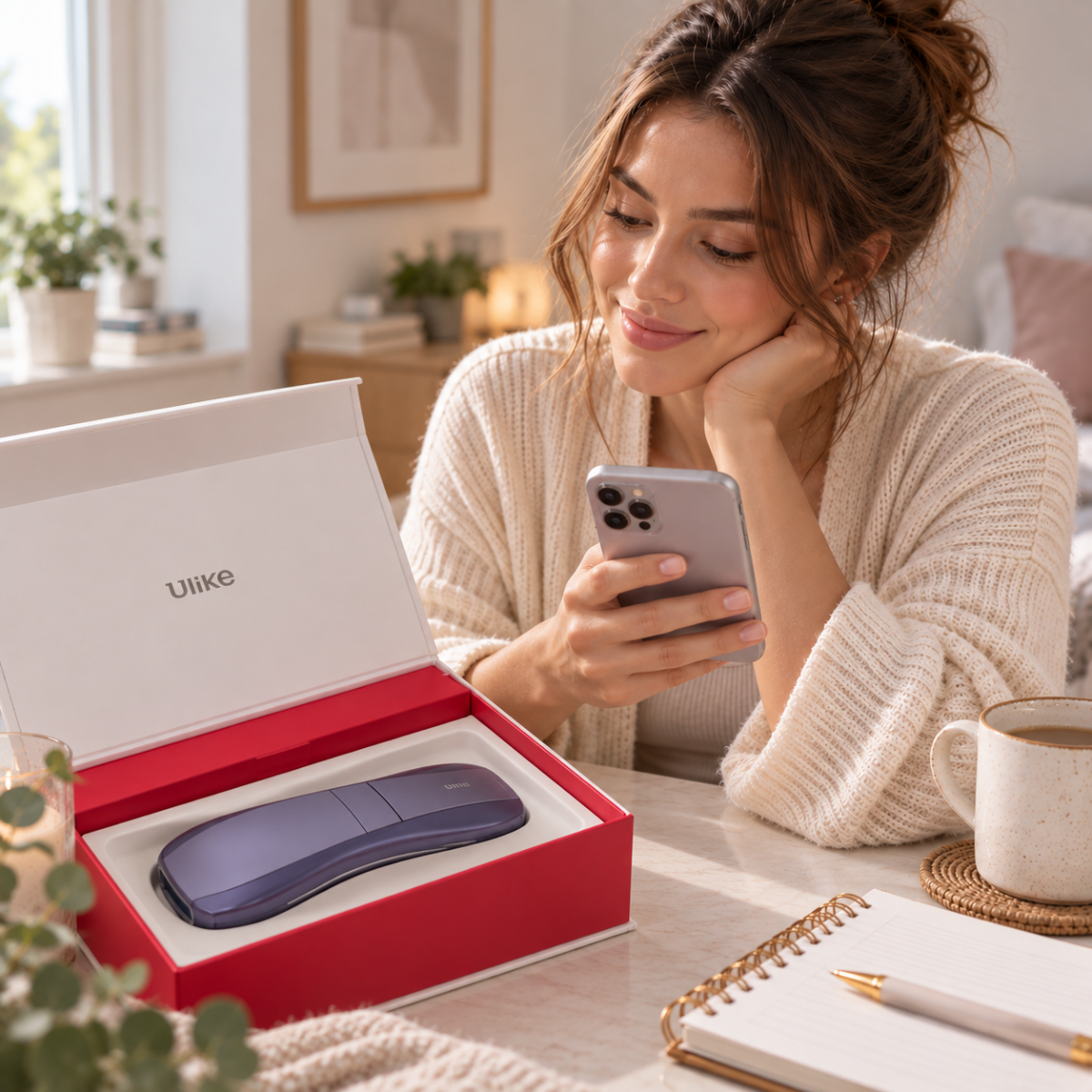
What Happens If You Miss an IPL Treatment?
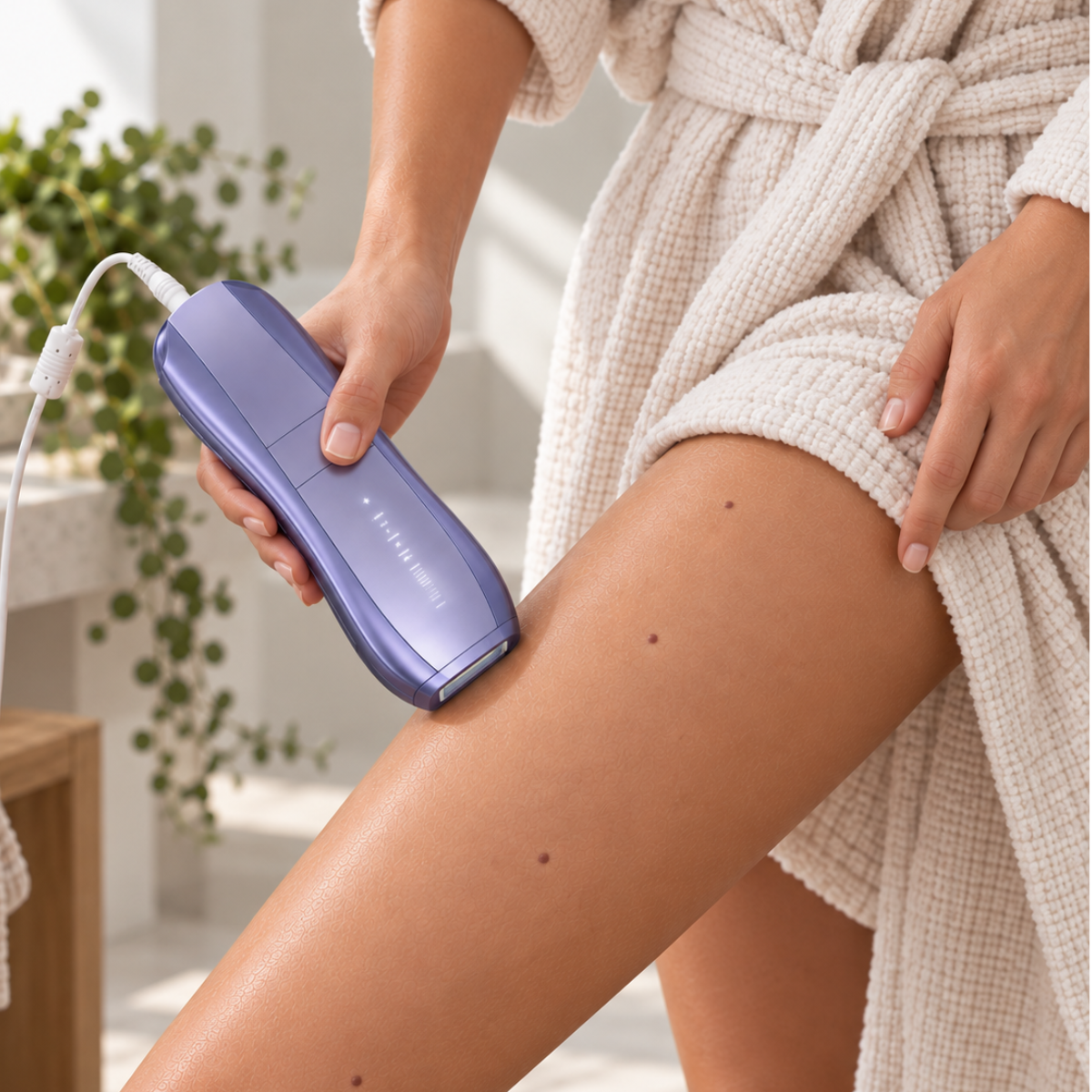
Can You Use IPL on Moles and Birthmarks?
Explore Beauty
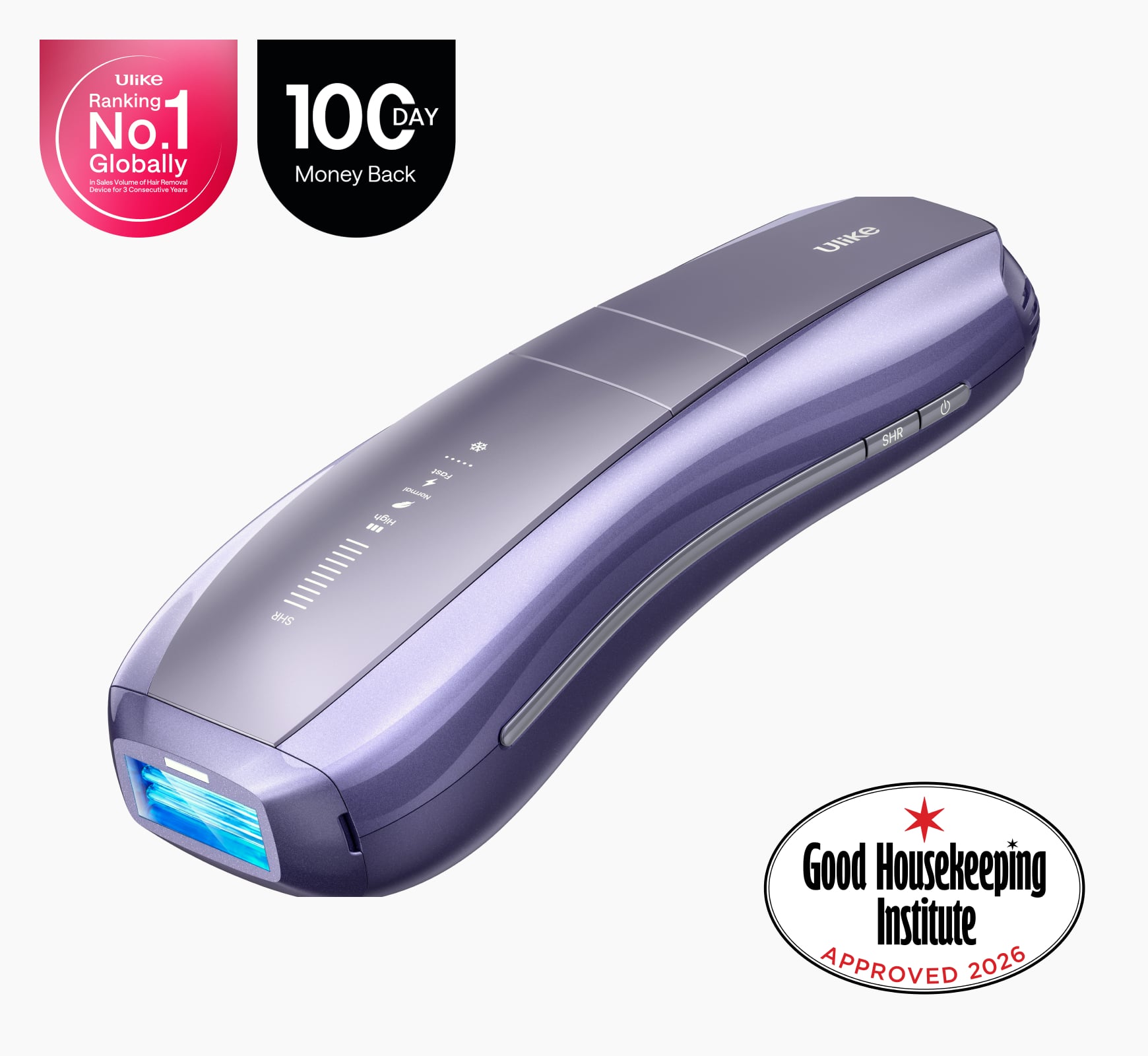
Ulike Air 10
2 weeks to silky smooth skin.
96% Hair Density Reduction in 2 Weeks
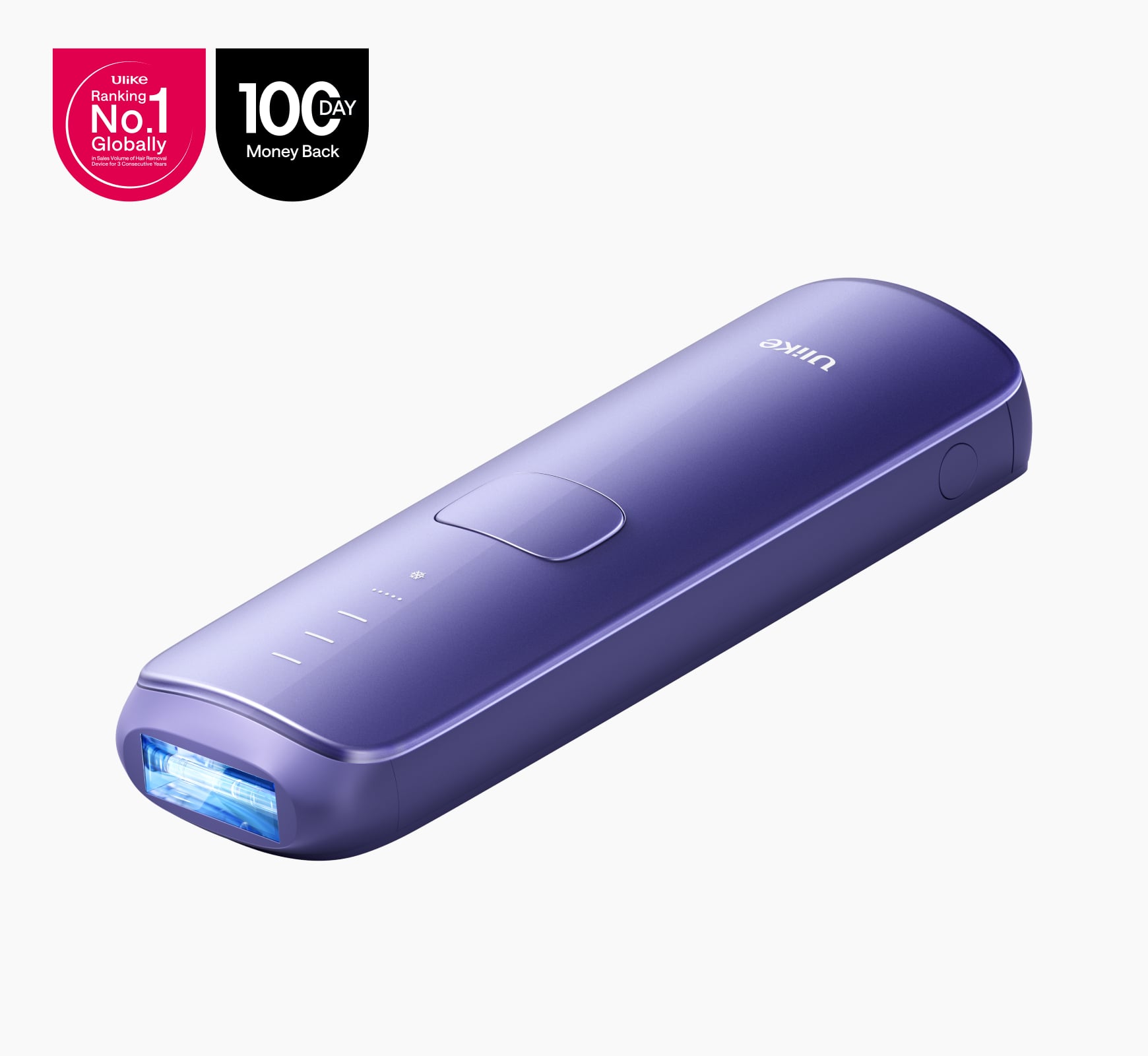
Ulike Air 3
3 weeks to silky smooth skin.
93% Hair Density Reduction in 4 Weeks
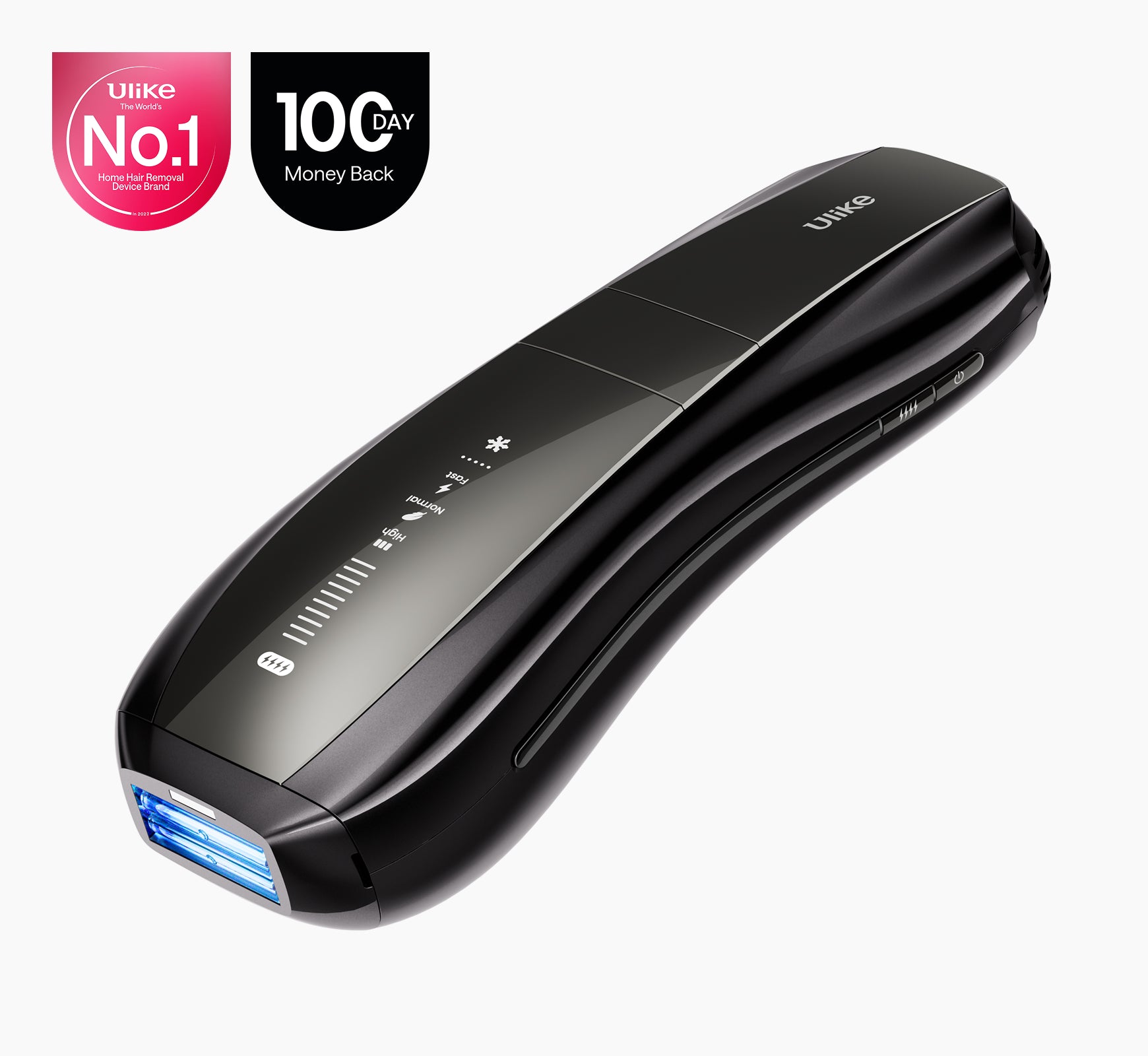
Ulike X
3 weeks to silky smooth skin.
94% hair reduction in just 2 weeks*
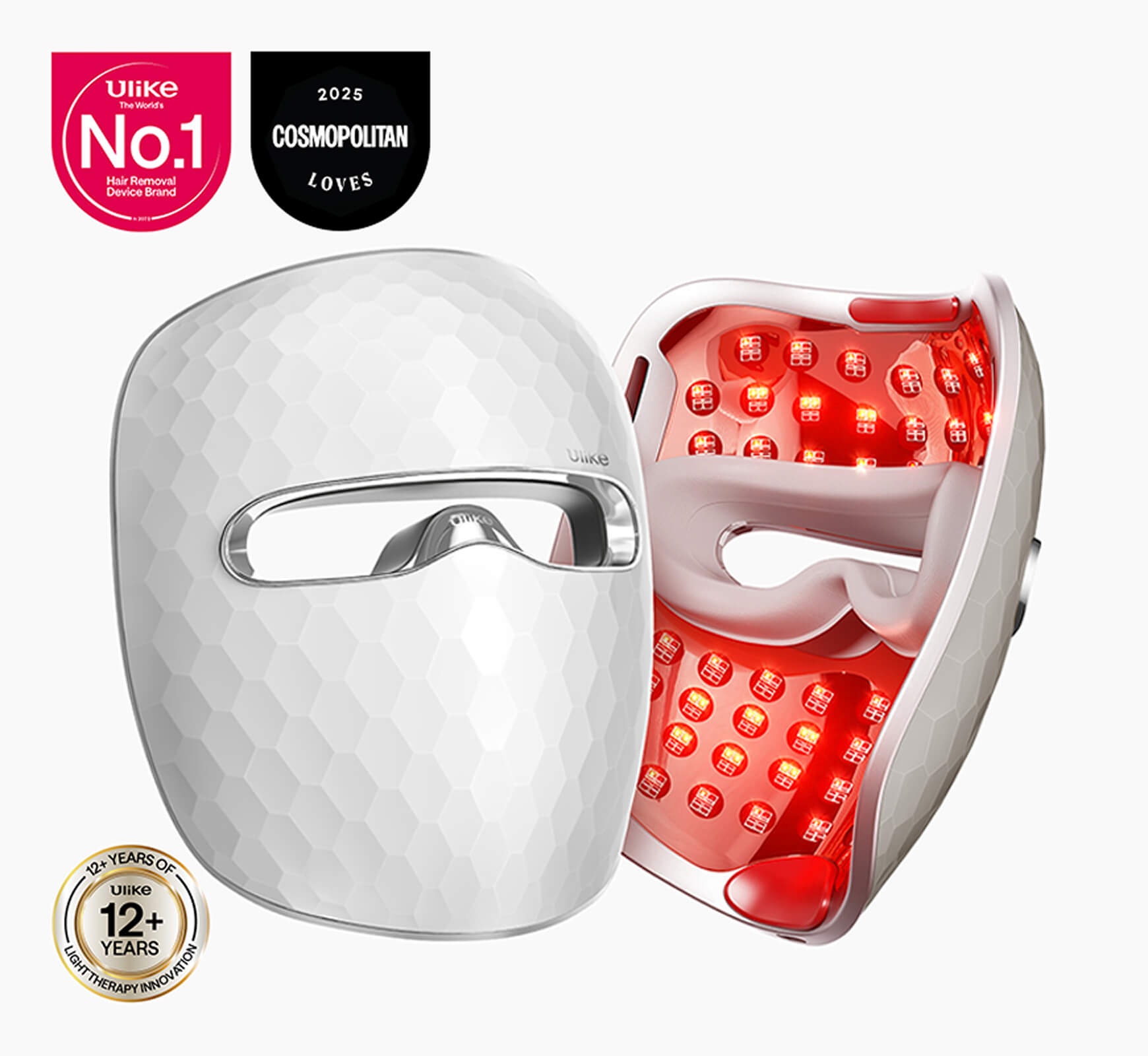
Ulike Reglow
Clearer skin in 2 weeks: Fewer breakouts
Smoother skin in 4 weeks: Fewer lines, firmer feel