



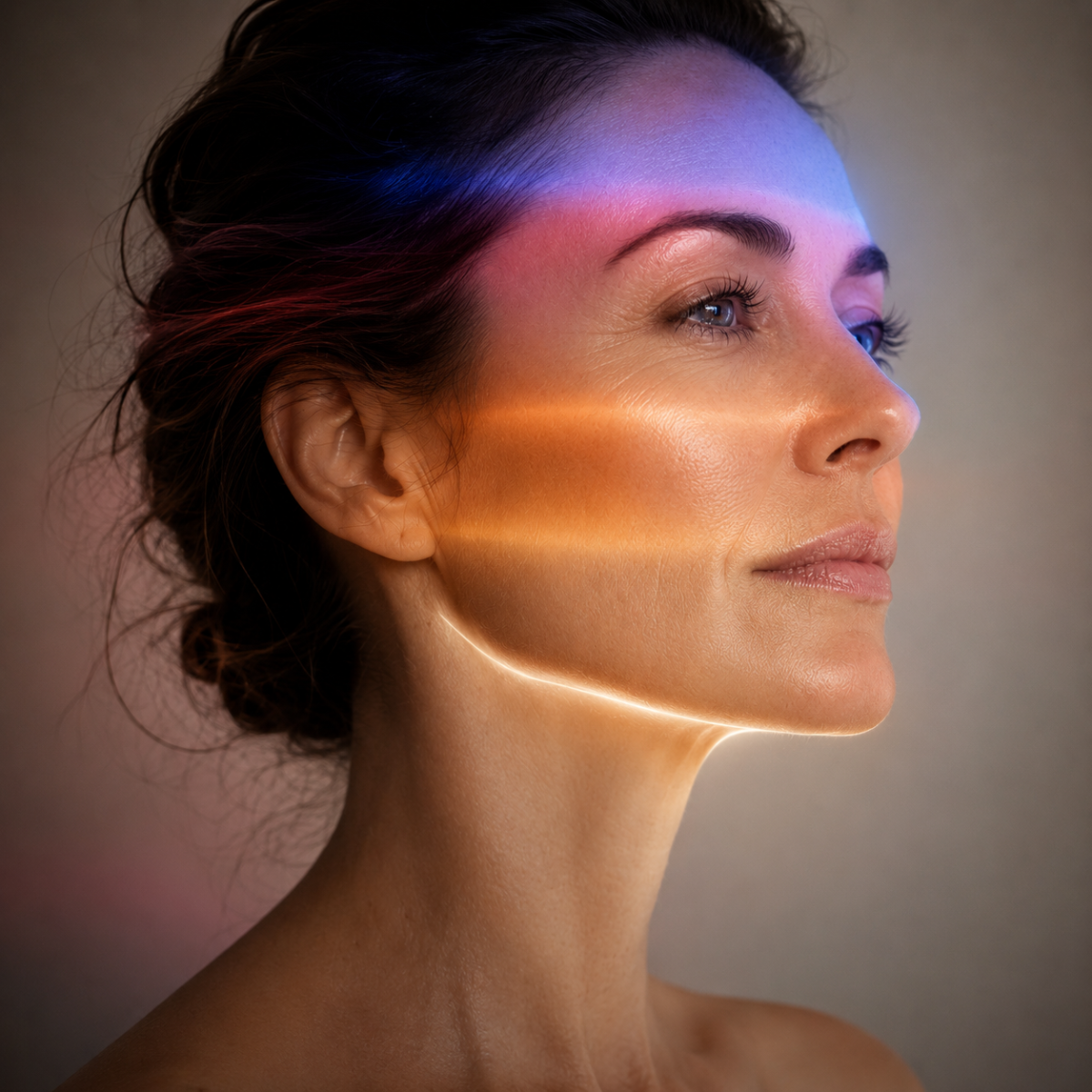
RF vs HIFU vs LED: Which Skin Technology Is Right for You?

RF vs HIFU vs LED: three skin treatments that are often discussed together, despite working in completely different ways. All promise firmer, younger-looking skin. But the level of intensity, the cost, the timeline for results, and the amount of commitment involved can vary dramatically depending on which one you choose.
Some focus on surface-level concerns like dullness and fine lines. Others target deeper structural tissue linked to sagging and loss of definition around the jawline. A daily LED mask at home is a very different experience from booking a clinic-based HIFU session, even if both sit under the umbrella of “non-surgical anti-ageing”.
That is where most comparisons fall short. RF, HIFU, and LED light therapy are frequently presented as though they achieve the same outcome, with very little explanation of what each technology actually does best.
In this guide, you will find an easily understandable comparison between the two approaches, including how they work, which skin layer they target, how long results realistically take, risks associated with each, and finally, which one suits you best.
RF vs HIFU vs LED: Why They Are Compared So Often
Each Technology Works at a Different Skin Depth
RF, HIFU and LED are often grouped together because they represent all the non-invasive methods that can be used to improve the quality of your skin without any surgical procedure. However, what is called "non-invasive" may vary greatly. The key difference is how deeply each technology works beneath the skin.
Understanding skin depth is the most useful shortcut in this whole comparison. The skin has layers: the outermost epidermis, the dermis beneath it, and the deeper structural tissue called the SMAS layer (superficial musculoaponeurotic system). Where a treatment works determines what it can change.
What “Non-Invasive” Really Means for RF, HIFU and LED
'Non-invasive' means the absence of any needles, cuts, and anaesthesia. However, it does not mean a lack of sensation, responsibility, and risks. RF and HIFU work on the basis of energy application, which leads to heating of the tissues and, therefore, the results, as well as the need for professional training for its safe application. LED treatment works in another way: it applies light waves for stimulating cells without heating them.
How RF, HIFU and LED Actually Work
Radiofrequency (RF): Heating the Dermis to Rebuild Collagen
RF is used to deliver the electrical energy into the skin, resulting in the production of heat in the dermis layer that lies 1–4mm below the skin’s surface. The heat produced is the catalyst in the body’s natural healing process, stimulating the fibroblasts to create new collagen and elastin.
The result, over several weeks, is tighter, smoother skin. RF is particularly effective for mild to moderate skin laxity and improving overall texture. It does not reach the deeper structural tissue that causes significant sagging, which is where HIFU operates.
HIFU: Focused Ultrasound that Reaches the SMAS Layer
HIFU uses focused ultrasound energy to create precise thermal injury points deep in the skin, sometimes reaching 4.5mm into the SMAS layer, the same tissue surgeons address during a facelift. That depth is HIFU's defining feature.
Because the energy bypasses the skin surface entirely and concentrates deep in the tissue, HIFU can produce lifting effects that RF simply cannot match. It also tends to be more uncomfortable than RF, and the results are more gradual — the full lifting effect often takes three months to appear as the collagen remodelling process runs its course.
LED Light Therapy: Wavelengths that Stimulate Cells without Heat
LED (light-emitting diode) is based on an entirely different concept. Light at certain wavelengths penetrates the skin to certain depths and interacts directly with the cells to produce biological effects without any heating effect.
Different wavelengths do different things:
Red light (around 630nm) penetrates to the dermis and stimulates collagen production, improving fine lines and firmness over time.
Near-infrared light (around 830nm) reaches deeper tissue, accelerating cellular repair and reducing inflammation.
Yellow light (around 590nm) targets the skin's surface layers, reducing redness and improving tone.
Blue light (around 465nm) works at the epidermis level, where it targets the bacteria associated with acne.
Because LED does not generate heat, it carries no risk of burns or tissue damage when used correctly. This makes it the most suitable technology for consistent home use — and consistent use is exactly what LED requires to deliver results. For a detailed breakdown of what each light wavelength targets, the science is well established across clinical literature.
The Skin Depth Comparison: Where Each Treatment Actually Works
This is the clearest way to understand which technology does what.
Technology |
Depth Reached |
Primary Target |
Mechanism |
LED |
Epidermis to upper dermis (1–2mm) |
Tone, radiance, fine lines, acne |
Light wavelengths stimulate cellular activity |
RF |
Mid-dermis (1–4mm) |
Mild laxity, texture, collagen density |
Electrical energy heats tissue to stimulate collagen |
HIFU |
Deep dermis + SMAS (up to 4.5mm) |
Significant laxity, jawline, lifting |
Focused ultrasound creates thermal coagulation points |

Surface-Level Skin Concerns: Where LED Works
LED works the closest to the surface level, which is the reason for its effectiveness in treating skin pigmentation, reducing redness of the surface layer, and addressing early signs of ageing. However, LED cannot perform such deep restructuring as HIFU does and therefore cannot be used as a substitute for it.
It is something that, when it works, does so continuously and safely. The effect of cellular stimulation from using LEDs regularly builds up with time, which explains why those who are most successful at it see it as a continuous process, like skincare.
Mid-Dermis Collagen Support: Where RF Works Best
RF's heat reaches the mid-dermis, which is where the collagen and elastin fibres that give skin its structure live. By heating this tissue to around 40–45°C, RF provokes a wound-healing response that gradually increases collagen density. This is why RF suits people with mild to moderate firmness concerns more than those with surface-level issues.
Deep Tissue and SMAS Layer: HIFU's Unique Reach
No at-home device, RF, or LED currently achieves the depth of a clinical HIFU treatment. Reaching the SMAS layer at 4.5mm with enough energy to cause the precise thermal injury required for lifting is technically demanding and carries real risk if the energy is misdirected. This is why clinical HIFU remains a professional-only treatment.
What Results to Expect and When
Vague timelines are one of the most common complaints in skincare reviews. Here are realistic, specific windows for each technology.
LED: Glow in Days, Cumulative Improvement Over Weeks
Days 1–7: Many users notice calmer, more hydrated-looking skin within the first few sessions. Redness and inflammation often respond first.
Weeks 2–3: Clearer skin tone, reduced surface congestion, and improved radiance become more consistent.
Weeks 4–6: With daily or near-daily use (sessions of 8–10 minutes), fine lines and early firmness improvements become visible.
Weeks 8+: Collagen stimulation effects compound. Skin texture and clarity continue to improve with ongoing use.
LED does not produce dramatic overnight results. What it produces is a reliable, cumulative improvement that tracks closely with consistency. For a more detailed, realistic timeline for LED results, week-by-week expectations vary depending on the concern being treated.
RF: Firming and Texture Improvement Across 2–6 Weeks
Weeks 1–2: Minimal visible change. The collagen remodelling process is underway but not yet visible.
Weeks 3–4: Skin begins to feel firmer. Texture often improves first.
Weeks 5–6: Visible tightening and reduction in mild laxity. Most clinical RF protocols run for 6–8 sessions over this period.
Months 3–6: Results continue to develop after the course ends, as new collagen continues to mature.
RF requires a course of treatments — usually 6–8 sessions — not a single appointment. Factor that into both the cost and the commitment.
HIFU: Gradual Lifting Results Over 6–12 Weeks
Immediately post-treatment: Skin may appear slightly pink and feel tender. Some people notice mild swelling.
Weeks 2–4: The thermal repair process is active but results are not yet visible. This is the most common moment of doubt.
Weeks 6–8: Lifting and tightening begin to become visible, particularly at the jawline and brow.
Weeks 10–12: Peak results. The full effect of collagen remodelling and SMAS tightening is typically visible at this stage.
Duration: HIFU results can last 12–18 months, after which a maintenance session is usually recommended.
Which Is Best for Your Skin Concern?
For Fine Lines and Dull Skin: Why LED is Often the Smarter Start
If your primary concerns are uneven tone, surface dullness, mild fine lines, or early signs of ageing, LED is genuinely effective — and the risk profile is minimal compared with heat-based technologies. The evidence base for LED in improving skin clarity and stimulating collagen is solid.
Clinically, red light at 630nm has been shown to increase collagen density and improve skin texture with repeated exposure (Avci et al., 2013). Near-infrared at 830nm adds a deeper anti-inflammatory and repair effect that complements the surface-level work.
For someone asking "is LED better than HIFU for fine lines?" — LED will not deliver the structural lifting HIFU provides. But for fine lines specifically, LED's collagen-stimulating effect is clinically meaningful and achievable at home without the cost or recovery time of clinical treatments.
For Mild Sagging and Texture: When RF Makes Sense
RF sits between LED and HIFU in both depth and effect. If your skin has lost firmness in the mid-face, around the jawline, or at the neck — but the laxity is mild to moderate rather than significant — RF offers a meaningful improvement in collagen density without the invasiveness of HIFU.
The trade-off is that RF requires a course of clinical sessions to get the best results, and home RF devices vary considerably in the energy levels they can safely deliver. Results are real but require patience.
For Significant Laxity and Jawline Definition: The Case for HIFU
HIFU is the most powerful non-surgical option for people with significant skin laxity — visible jowling, loss of jawline definition, or brow heaviness. Because it reaches the SMAS layer — the structural foundation beneath the skin — it can produce lifting that no surface or mid-dermal treatment can replicate.
It is also the most expensive option (typically £600–£1,500 per session in the UK) and the least comfortable. It is always a clinical treatment, and it requires a significant wait before results appear. For the right candidate with the right concern, however, it is highly effective.
At-Home vs Clinic: A Practical Safety Guide

Which Treatments Are Safe for Home Use?
LED is the safest technology for consistent home use. Because it operates without heat, the risk of burns, nerve damage or tissue injury — if the device is properly designed — is minimal. Look for devices that are FDA cleared and UKCA compliant, as these have undergone regulated testing for safety and efficacy.
Home RF devices exist and are generally lower-powered than clinical machines, which means they are safer but produce more modest results. They can be a useful supplement to clinical treatments but are unlikely to replicate the outcome of a professional session.
HIFU at home is a different matter. Consumer-grade HIFU devices do exist, but the risks are significant. Misdirected ultrasound energy at depth can cause nerve damage, fat atrophy, or burns. Before using any at-home HIFU device, read carefully about the risks of using HIFU at home — the clinical consensus is clear that significant-depth HIFU should remain in professional hands.
Why LED Masks are the Most Accessible Entry Point
At-home LED masks have improved significantly in recent years. A well-designed device using clinically relevant wavelengths and consistent light output can produce meaningful improvements in skin clarity, tone, and early signs of ageing, particularly when used regularly.
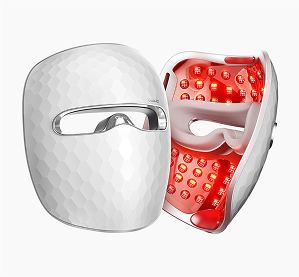
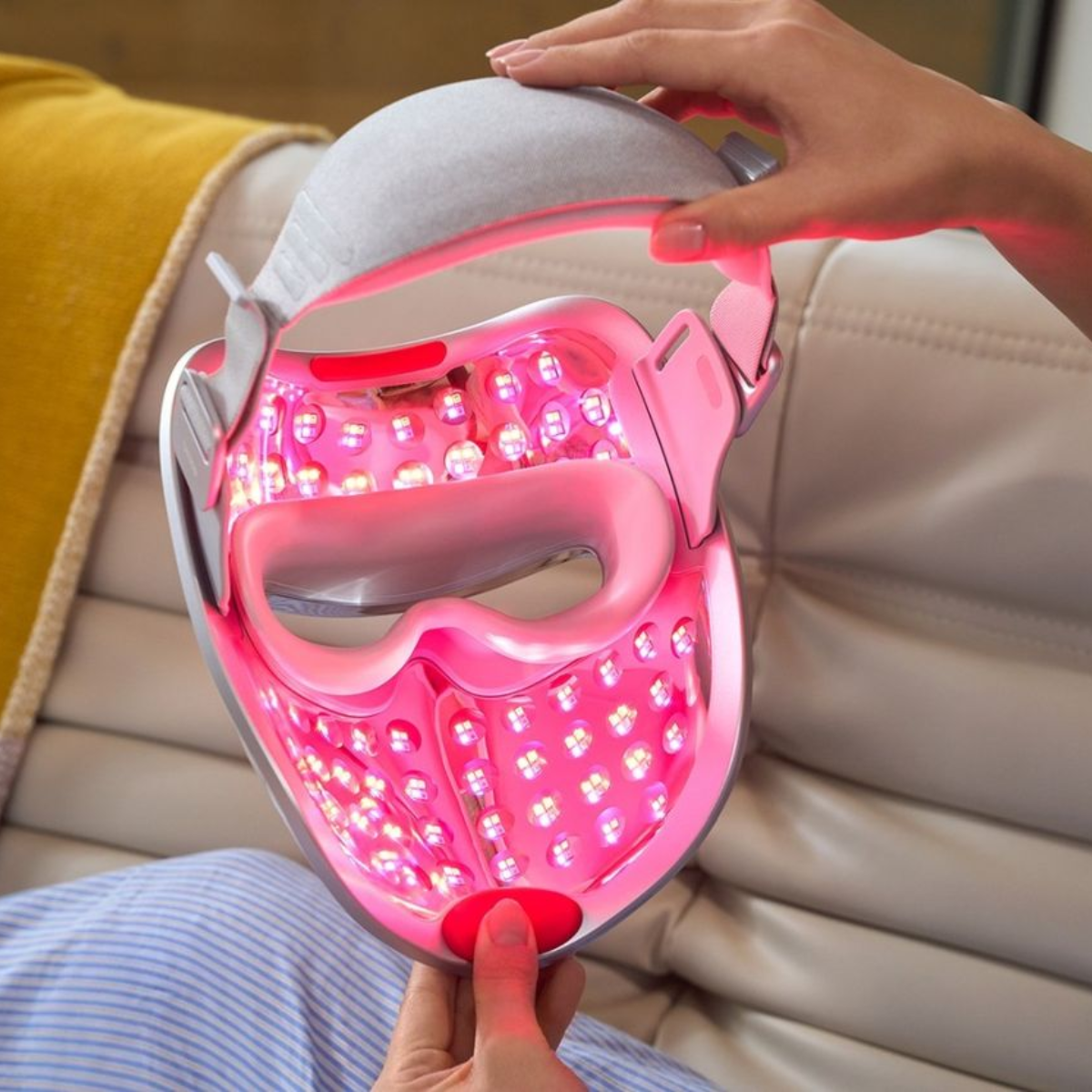
The Ulike ReGlow LED mask is an example of the advancement in home LED technology from the days when it was only about red-light masks. The ReGlow mask has four wavelengths, including red (630 nm), infrared (830 nm), yellow (590 nm), and blue (465 nm). The mask consists of 272 LED beads that use the mirror reflection technique for better light distribution on the face.
For UK users, safety and compliance matter as much as the technology itself. ReGlow is UKCA-cleared and tested by SGS Laboratories, with built-in eye protection and short treatment sessions designed for realistic home use. Most modes run for between five and eight minutes, making consistent use far more achievable than regular clinic appointments.
That practicality is a large part of LED’s appeal. Unlike RF or HIFU, LED fits easily into an existing skincare routine and carries minimal risk when used correctly. The results are gradual rather than dramatic, but for many people, that trade-off is exactly the point.
Questions to Ask Before Booking a HIFU or RF Clinic Session
Before committing to a clinical HIFU or RF treatment, it is worth asking these directly:
What machine do you use, and what depth settings are you applying?
How many sessions are included in the quoted price?
What results are realistic for my skin concern and skin type?
What are the potential side effects, and how common are they in your clinic?
Are before-and-after photos from actual patients available?
A good clinic will answer all of these without hesitation.
Can You Combine RF, HIFU and LED?
Combining technologies is increasingly common in clinical dermatology — and for good reason. Each technology works at a different depth, which means they do not compete with each other. They layer.
A typical combined protocol might use HIFU for deep structural lifting once or twice a year, RF to support mid-dermal collagen density, and LED daily or near-daily to maintain surface quality and support ongoing cellular repair. Each layer addresses something the others cannot.
Why RF, HIFU and LED Work Well Together
For most people exploring this at home, a practical starting point looks like this:
Daily or near-daily LED sessions (8–10 minutes) form the foundation. LED builds collagen, improves tone, and reduces inflammation across all skin types. Once established, RF can be added two to three times per week to address texture and firmness at a deeper level if mild laxity is a concern.
For how to use LED alongside your existing skincare routine, the integration is straightforward — LED works well after cleansing and before serums. It does not sensitise the skin the way acids or retinoids might, so there is no significant timing restriction for most people.
HIFU, if relevant to your concern, is a once-or-twice-yearly clinic commitment — not a home routine. It sits on top of everything else rather than replacing it.
Which One Should You Start With?

Choosing Between RF, HIFU and LED Based on Budget and Skin Goals
Use this as a framework:
Your concern is mainly dull skin, uneven tone, surface redness, or mild fine lines: Start with LED. It is effective, safe for daily use, and the cumulative results are clinically supported. Cost-effective over time compared with clinic appointments.
Your concern is reduced firmness, mild jowling, or textural changes in the mid-face: LED as a foundation, with RF — either at a clinic or via a reputable home device — added for deeper collagen support. Expect a course of sessions, not a single fix.
Your concern is significant laxity, visible jowling, or jawline loss: HIFU at a reputable clinic is the most appropriate starting point. Support it with LED for surface maintenance between sessions.
Budget is a significant factor: LED is by far the most cost-effective option for ongoing home use. A quality LED mask represents a one-time purchase compared with repeated clinic costs for RF or HIFU.
Why LED Is Usually the Best Starting Point
Dermatologists and aesthetic practitioners frequently recommend LED as the foundation of a home skincare technology routine — not because it is the most dramatic option, but because it is the most sustainable. It is safe for all skin types, does not require recovery time, and the evidence for its cumulative benefit across tone, clarity, and collagen stimulation is robust.
It also does not preclude anything else. You can use LED daily and still book an RF course or a HIFU session when your budget and concern warrant it. Starting with LED does not close any doors.
For a considered, well-evidenced entry point into at-home skin technology, the Ulike ReGlow LED mask is a strong option. Four wavelengths across four targeted modes, FDA cleared, and designed for daily 8–10 minute sessions. It covers the science properly rather than using token LED coverage as a marketing add-on.
If your skin concern is more advanced and you are ready to explore clinic options, use the questions above to vet your provider carefully. The technology works — the variable is always the person or device delivering it.
Frequently Asked Questions
What is the difference between RF, HIFU and LED for skin?
RF (radiofrequency) heating causes the mid dermis to be heated for the purpose of stimulating collagen and tightening the skin. HIFU makes use of ultrasound technology to penetrate deeper tissues, even reaching the SMAS layer, hence providing greater results for tightening. LED involves the use of particular light waves to stimulate cell activities without any heating.
Which is better for anti-ageing: RF, HIFU or LED?
It depends on the concern. LED is best for radiance, mild fine lines and overall skin health — and safe for consistent home use. RF suits mild sagging and texture. HIFU is most effective for significant laxity and jawline definition. For most people starting out, LED offers the lowest risk with real cumulative results.
How long does LED light therapy take to show results?
With consistent use, most people notice clearer, calmer skin within two weeks. Firmer texture and reduced fine lines typically become visible after four weeks of regular sessions. LED results are gradual and cumulative — daily or near-daily use of 8–10 minutes per session delivers the most consistent improvement over time.
Is LED light therapy as effective as HIFU?
Not for the same concerns. HIFU targets deep tissue lifting — something LED cannot replicate. But for skin tone, radiance, fine lines and acne, LED is clinically supported and genuinely effective. The two technologies work at different depths and are better understood as complementary than competing.
Can you use RF and LED together?
Yes — and many dermatologists recommend it. RF stimulates collagen in the mid-dermis; LED supports cellular repair and radiance at the surface level. Used together, they address different layers without interference. LED is typically used more frequently (daily or near-daily), while RF is done two to three times per week.
Is HIFU safe to use at home?
Risks such as nerve damage and fat atrophy may occur due to improper energy application in consumer HIFU devices. Clinical HIFU is the safer approach to take when considering this technology. LED and low-powered RF devices are far better suited for home use.
References
- Avci, P., Gupta, A., Sadasivam, M., Vecchio, D., Pam, Z., Pam, N. and Hamblin, M.R. (2013) ‘Low-level laser (light) therapy (LLLT) in skin: Stimulating, healing, restoring’, Seminars in Cutaneous Medicine and Surgery, 32(1), pp. 41–52. Available at: https://pubmed.ncbi.nlm.nih.gov/24049929/
- Bae, H. and Kim, H.J. (2014) ‘Clinical outcomes of intense focused ultrasound-assisted lipolysis and its histological evaluations’, Aesthetic Surgery Journal, 34(4), pp. 615–622. Available at: https://orcid.org/0000-0002-0137-6849
- Elsaie, M.L. (2021) ‘Cutaneous remodeling and photorejuvenation using radiofrequency devices’, Indian Journal of Dermatology, 54(3), pp. 201–205. Available at: https://doi.org/10.4103/0019-5154.55625
- Lee, S.Y., Park, K.H., Choi, J.W., Kwon, J.K., Lee, D.R., Shin, M.S., Lee, J.S., You, C.E. and Park, M.Y. (2007) ‘A prospective, randomized, placebo-controlled, double-blinded, and split-face clinical study on LED phototherapy for skin rejuvenation: Clinical, profilometric, histologic, ultrastructural, and biochemical evaluations and comparison of three different treatment settings’, Journal of Photochemistry and Photobiology B: Biology, 88(1), pp. 51–67. Available at: https://doi.org/10.1016/j.jphotobiol.2007.04.008
- Ruiz-Esparza, J. and Gomez, J.B. (2003) ‘The medical face lift: A noninvasive, nonsurgical approach to tissue tightening in facial skin using nonablative radiofrequency’, Dermatologic Surgery, 29(4), pp. 325–332. Available at: https://doi.org/10.1046/j.1524-4725.2003.29080.x
- Suh, D.H., Oh, Y.J., Lee, S.J., Ryu, H.J., Song, K.Y., Kim, N.I. and Kwon, T.E. (2015) ‘A intense-focused ultrasound tightening for the treatment of infraorbital laxity’, Journal of Cosmetic and Laser Therapy, 17(1), pp. 10–15.https://doi.org/10.3109/14764172.2012.738912

Yellow Light Therapy for Skin: What It Does and Why It’s Used in LED Treatments
LED Mask for Acne: Do They Really Help Clear Breakouts?

How Do You Get Rid of Jowls? Practical Ways to Support a Firmer-Looking Jawline
Explore Beauty
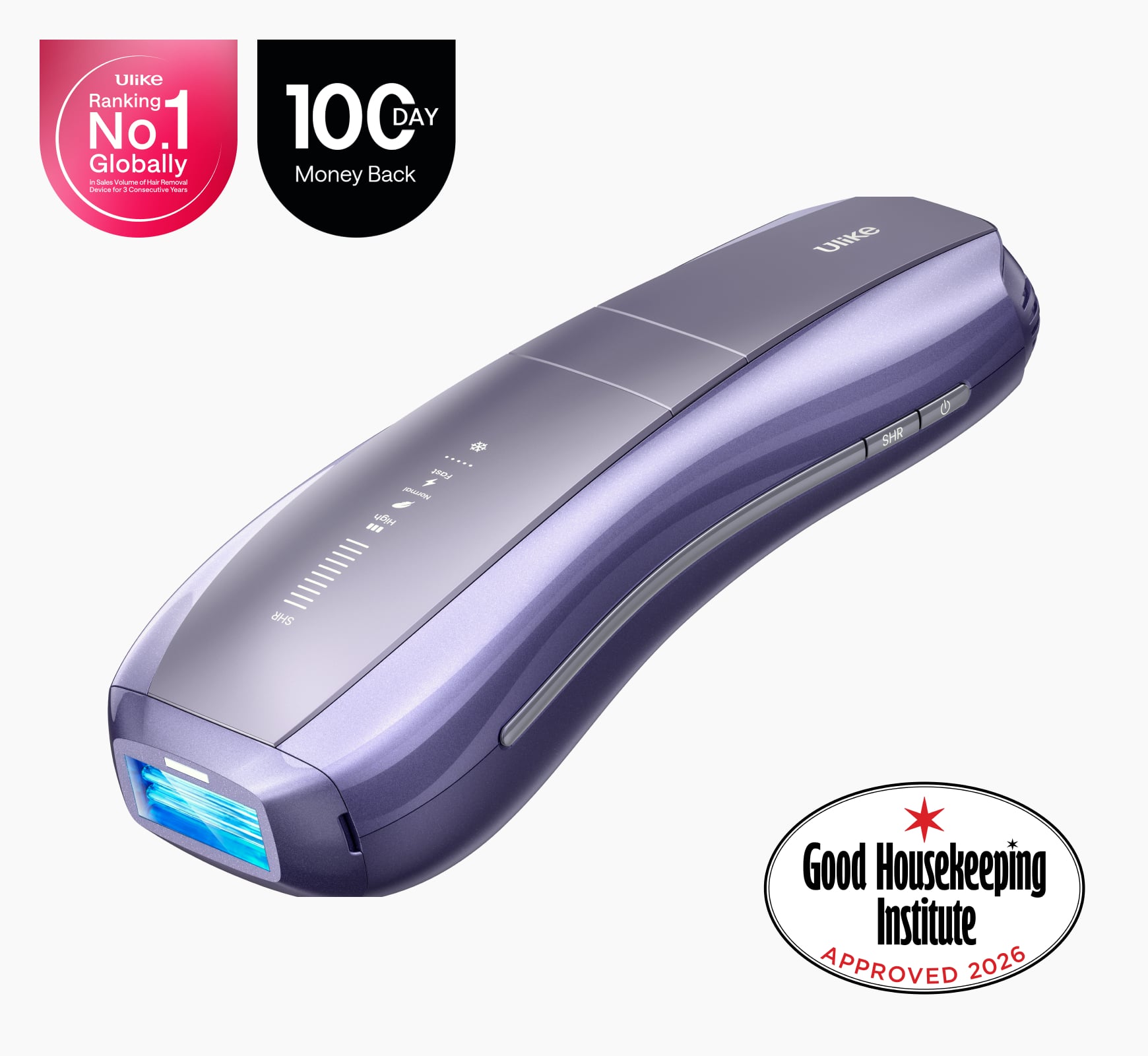
Ulike Air 10
2 weeks to silky smooth skin.
96% Hair Density Reduction in 2 Weeks
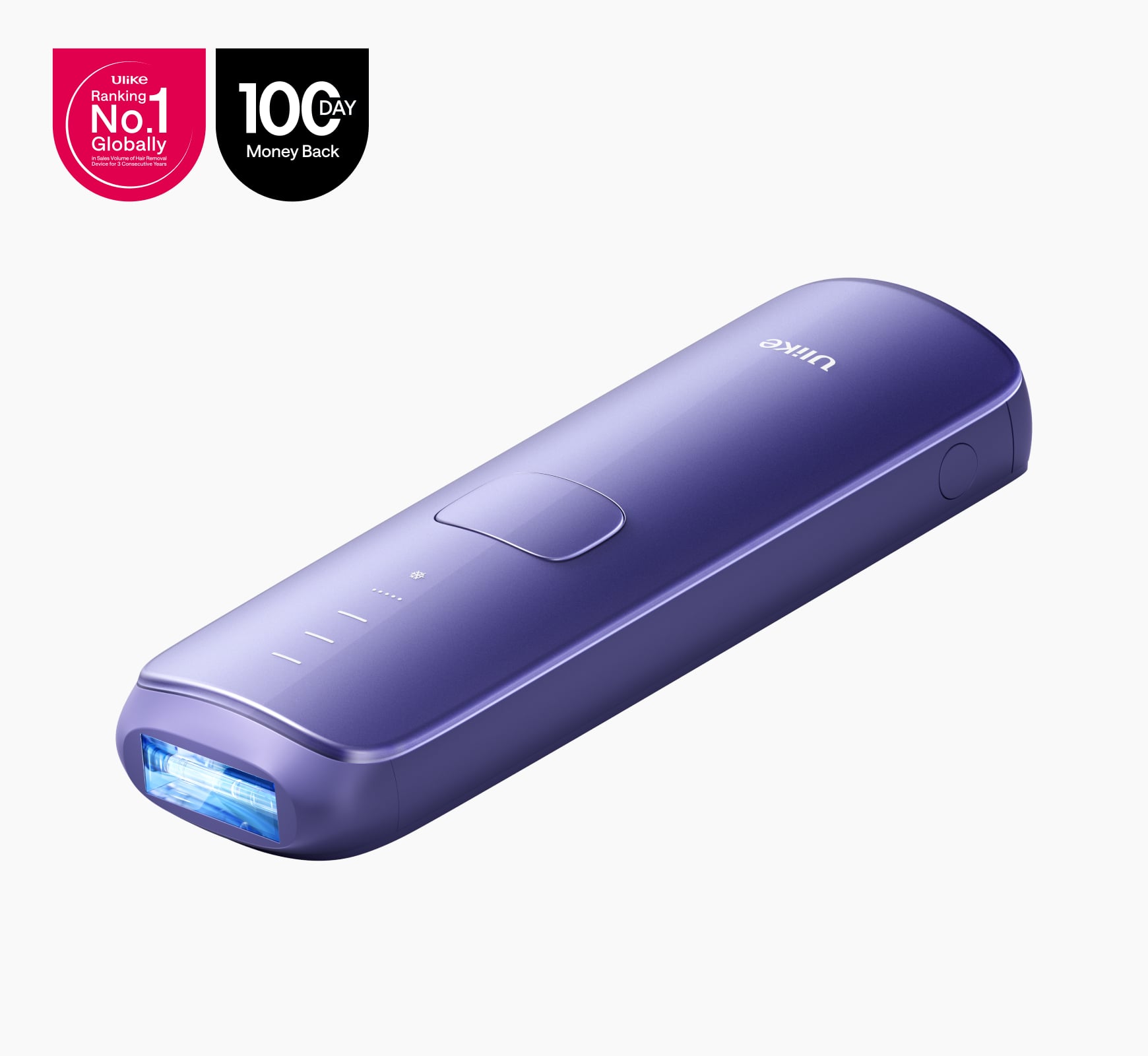
Ulike Air 3
3 weeks to silky smooth skin.
93% Hair Density Reduction in 4 Weeks
Ulike X
3 weeks to silky smooth skin.
94% hair reduction in just 2 weeks*
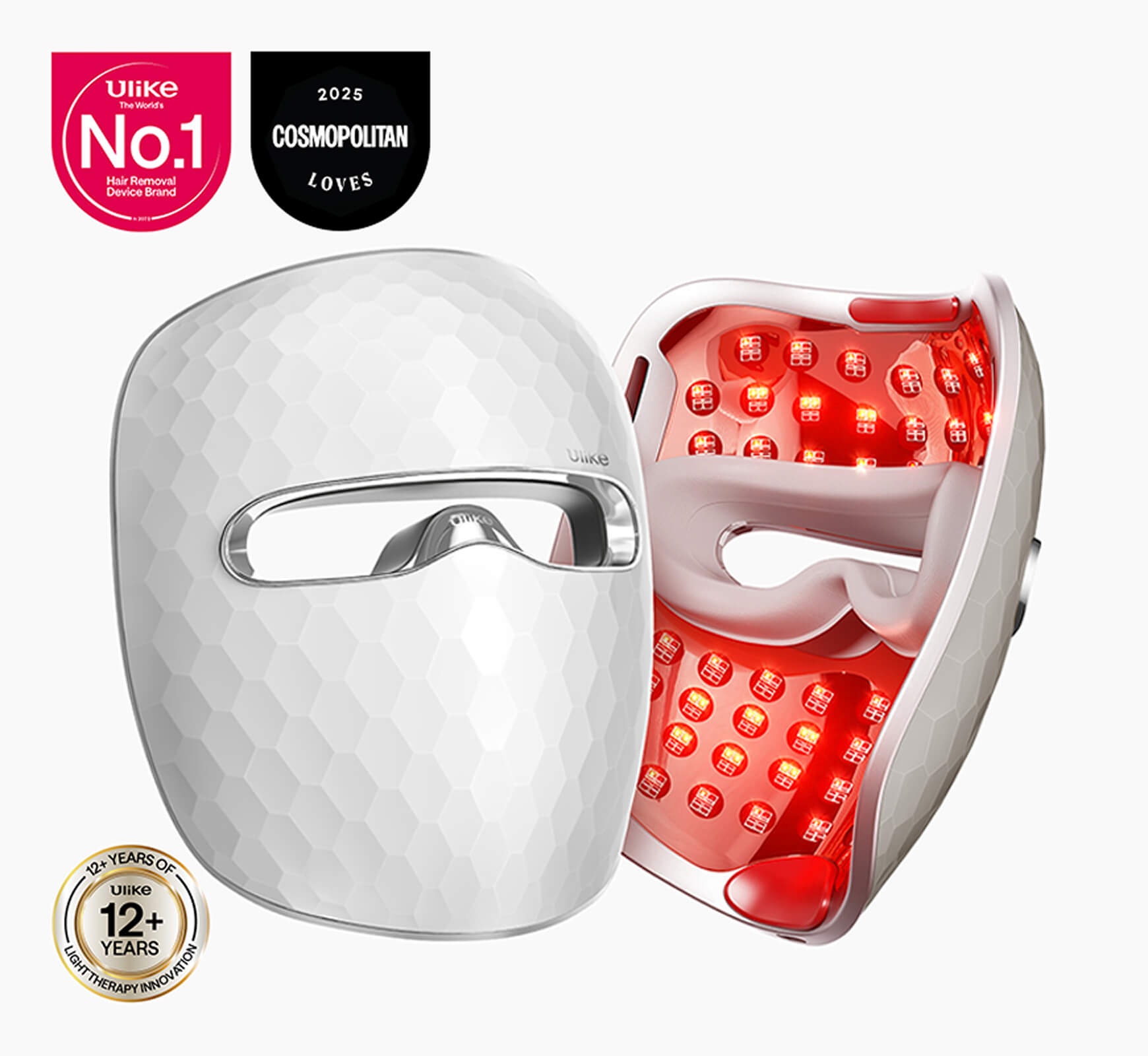
Ulike Reglow
Clearer skin in 2 weeks: Fewer breakouts
Smoother skin in 4 weeks: Fewer lines, firmer feel