
Woman with psoriasis looking directly at the camera with a calm and considered expression
Hair Removal

IPL and Psoriasis: Can You Safely Use an At-Home IPL Device If You Have Psoriasis?

IPL and Psoriasis: For most people managing psoriasis, at-home IPL hair removal is not currently recommended. That much is straightforward. But the reasons why are worth understanding properly, because the nuances genuinely matter here, and the blanket advice you will find on most websites does not capture them. Safety depends on where your psoriasis is, how active it is, what you are treating it with, and whether you happen to be what dermatologists call a Koebner responder. None of those factors gets a mention in the generic contraindications list that IPL brands tuck into their small print. This guide is written for people who actually live with psoriasis and want a real answer, not a liability disclaimer dressed up as advice. The Short Answer and Why It Is Not as Simple as a Yes or No IPL hair removal is generally contraindicated for psoriasis. Most manufacturers, Ulike included, advise against use on or near affected skin. That guidance stands and should be taken seriously. Psoriasis, though, is not a binary condition. It ranges from mild plaque psoriasis covering a small patch behind the ears to severe, widespread flares across large areas of the body. Someone eighteen months into full remission is in a completely different situation from someone whose legs and torso are currently flaring. Treating both identically makes no clinical sense. Most online guidance does it anyway. So the more useful question is not whether people with psoriasis can use IPL. It is: given where my psoriasis is, how it is behaving right now, and what I am treating it with, what is my actual risk level and what should I do instead? Why Psoriasis Makes IPL More Complicated Than Other Skin Conditions Intense pulsed light (IPL) technology involves the release of energy from a source of light that affects the skin, specifically the melanin found within the hair follicle, and interferes with the hair’s natural growing process. Heat is created within the tissue. Most people will suffer no more than temporary irritation as a result. Psoriatic skin is a different case. The immune response is already dysregulated, and the skin barrier is already compromised. It reacts more strongly to physical and thermal stimuli than unaffected skin does. And crucially, there is a well-documented immunological phenomenon called the Koebner phenomenon that makes even controlled trauma to psoriatic skin, or to skin that has never been affected at all, a genuine trigger for new lesions. IPL qualifies as that kind of trauma. The Difference Between Active Psoriasis and Managed Remission Active psoriasis, meaning lesions that are red, flaky, and symptomatic, is perhaps the most clear-cut example of a contraindication for treatment with IPL. Treatment of active lesions with IPL poses a significant risk of making skin worse, provoking new lesions, and inducing skin damage through burning and hyperpigmentation. Remission is a different picture. Skin that has been fully clear for a significant period, no active plaques, no current flaring, carries a lower risk profile. Not zero, but lower. Some dermatologists are cautiously open to IPL on genuinely clear skin during stable remission. Others advise against it outright, citing the unpredictability of the Koebner response. There is no settled clinical consensus on this specific question, which is why it cannot be answered without a dermatologist who knows your personal history. What "Mild," "Moderate," and "Severe" Psoriasis Actually Means for IPL Suitability Psoriasis severity is classified largely by body surface area coverage and quality of life impact.  Mild means less than three percent body surface area.  Moderate is three to ten percent.  Severe is above ten percent, or moderate disease that is significantly debilitating. Severity matters for IPL decisions, but it is one factor among several. Location, current disease activity, and Koebner status all carry equal weight. Someone with severe psoriasis in prolonged stable remission may be a more reasonable candidate than someone with mild psoriasis that is currently flaring across both legs. The number on its own tells you very little. The Koebner Phenomenon: The Key Concept Every Psoriasis Patient Needs to Understand This is probably the most important concept in the entire discussion, and it is almost completely absent from the mainstream conversation about IPL and psoriasis. Search for articles on this topic and you will find it missing from nearly all of them. That is a serious gap, because without understanding it, none of the risk guidance makes sense. What Is the Koebner Phenomenon? Heinrich Köbner first described this in 1876. The phenomenon, also called isomorphic response or koebnerisation, refers to the development of new psoriatic lesions on skin that was previously unaffected, triggered by some form of physical trauma or injury to that skin. The trauma does not need to be severe. Cuts, scratches, friction, pressure, sunburn, tattoos, surgical incisions, and heat or light energy applied to the skin have all been documented as triggers. New lesions typically appear within ten to twenty days of the triggering event. They are morphologically identical to the patient's existing psoriasis and appear specifically at the site of the trauma, not necessarily anywhere near existing plaques. How IPL Can Trigger the Koebner Response IPL deposits real thermal energy into skin tissue. The light is absorbed by melanin in the hair follicle, converted to heat, and that heat damages the follicle to slow regrowth. The process is controlled and generally well-tolerated by people without underlying skin conditions. From the skin's perspective, it is still trauma. Controlled, yes. Targeted, yes. But it is a physiological event that the immune system registers, and in someone with Koebner susceptibility, that is enough. New psoriatic lesion development can occur in a treated area even when the skin looked completely clear at the time of the session. Why This Risk Exists Even on Skin That Looks Completely Clear Here is the part that genuinely catches people off guard. The Koebner phenomenon does not need existing lesions to be present in the treatment area. The susceptibility is systemic, not localised. Someone who koebnerises readily can develop new plaques anywhere on the body following trauma, regardless of whether that particular area has ever been affected before. This is precisely why the question "my psoriasis is only on my elbows, can I use IPL on my legs?" cannot be answered with a simple yes. If you are a Koebner responder, previously untouched leg skin could develop new lesions after an IPL session. If you are not, the risk profile shifts considerably. The problem is that susceptibility varies between individuals, and it is not fixed over time either. Someone who has not koebnerised in years can still do so when a new trigger presents itself. Not Everyone with Psoriasis Experiences Koebnerisation, but You Cannot Know in Advance Estimates suggest Koebner susceptibility affects somewhere between twenty-five and fifty percent of people with psoriasis, though figures vary across studies, and the true rate is difficult to pin down. It is not universal. Plenty of people with psoriasis have never koebnerised and will not necessarily do so from IPL. The problem is that there is no reliable, clinically validated test to determine susceptibility before treatment. Some practitioners use cautious small-area trial exposures, but that approach is not appropriate in the context of unsupervised at-home devices. Without knowing your Koebner status, the risk cannot be adequately quantified. Dermatologists err on the side of caution for this reason. You probably should, too. IPL on Affected Skin vs. Clear Skin: Is There a Difference? Yes, meaningfully so. This distinction is almost entirely absent from competing content on this topic, which tends to treat "psoriasis" as one undifferentiated contraindication regardless of the person's current skin state. Using IPL Directly on Psoriatic Plaques or Active Lesions: Why This Must Be Avoided The answer here is an unqualified no. Active psoriatic plaques involve a disrupted skin barrier, compromised local circulation, and significantly heightened inflammatory activity. Using IPL on this skin carries a substantially elevated risk of burns, pain, post-inflammatory hyperpigmentation, and direct worsening of the lesion itself. There is no safe use case for directing IPL at active psoriasis. The immunological question matters here too. The skin's immune environment around an active plaque is already dysregulated in ways that are not visible on the surface. Adding thermal trauma to that environment will not improve it. Using IPL on Unaffected Areas When Psoriasis Is Present Elsewhere This is the grey zone. If your psoriasis is on your elbows and you are considering IPL on your legs, which have no current or historical psoriasis, the risk is different from treating active plaques directly.  But it is not zero. The relevant questions become:  Are you a Koebner responder?  Is your psoriasis currently stable?  Are you on any medications that sensitise the skin? Koebner susceptibility does not observe anatomical limits. If you are in the middle of managing a flare somewhere on your body, your immune system is in a more activated state overall, which may make other areas more reactive than they would be during genuine remission. The Remission Window: What Dermatologists Generally Advise Some dermatologists take a more permissive approach to light-based hair removal during periods of genuine, extended remission, when the skin has been fully clear for months, the disease is stable, and there has been no recent flaring. The Koebner risk does not vanish during remission, but a less activated immune system may lower it somewhat. If you are in this position and want to explore IPL, the path forward is not a unilateral decision on your part. It is a specific, informed conversation with a dermatologist who knows your Koebner history, your current medication profile, and your pattern of disease over time. That is not a deflection. That conversation is genuinely the only way to get guidance that is calibrated to you rather than to a theoretical average patient. Why At-Home IPL Devices Carry a Different Risk Profile to Clinic Treatments In a professional clinical setting, a trained practitioner assesses your skin before each session. They adjust settings based on what they see, identify early warning signs of a problematic reaction, and have the knowledge and equipment to intervene if something goes wrong. At-home devices, Ulike among them, operate without any of that. The device cannot assess whether your skin is currently in a low-level flare. It cannot adjust output based on your immune status this week. It cannot stop a developing reaction. This does not make at-home IPL unsafe for suitable users.  But for someone with psoriasis, where individual variability and real-time skin assessment are genuinely consequential, the absence of clinical oversight is a meaningful part of the risk calculation. What Are the Specific Risks of IPL for People with Psoriasis? Risk of Triggering New Psoriatic Lesions in Previously Clear Skin Worth stating plainly, since it is the risk most people do not anticipate going in. The concern is not only about worsening existing plaques. It is about the potential emergence of entirely new psoriasis in areas that have been treated and appeared healthy before the session. Increased Skin Sensitivity and the Risk of Burns Psoriatic skin, including skin adjacent to plaques and skin that is inflamed at a subclinical level without any visible lesions, tolerates thermal stimuli less well than healthy skin. IPL settings appropriate for standard skin types can be too intense in this context. The burn and blistering risk is meaningfully elevated. Post-Inflammatory Hyperpigmentation: A Specific Concern for Psoriasis-Prone Skin Psoriatic skin does not heal the same way unaffected skin does. The inflammatory response that follows any trauma, including carefully controlled light exposure, can drive excess melanin deposition in the treated area. The result is darker patches that may take months to fade. This is a heightened concern for people with medium to deeper skin tones, but the risk extends across skin types when psoriasis is involved. Prolonged Healing and Disrupted Skin Barrier Recovery Even reactions that would clear up quickly in healthy skin can linger when the skin barrier is already structurally impaired. In psoriatic skin, the tight junctions between cells function less effectively, transepidermal water loss is higher, and the inflammatory signalling environment is altered in ways that slow recovery. Minor irritation that a non-psoriatic person might not notice can become a more protracted and uncomfortable process. The Risk of Infection on Compromised Skin The skin affected by psoriasis becomes more susceptible to any infection because of its damage, irritation, and thermolysis. The microtrauma caused by IPL treatment, damage to the hair follicle structure, or burn causes openings in the skin which are harder to protect. Does Psoriasis Medication Affect IPL Safety? Yes, it does, and this aspect of the discussion tends to be under-appreciated. As someone who treats psoriasis through the use of prescription drugs, the medications you take can be just as critical in this evaluation as the condition of your skin. Topical Steroids and Immunosuppressants: What You Need to Disclose Continued application of topical steroids causes thinning of the skin on those areas, making it vulnerable to injuries and burns. If you have been using steroid creams on your target area before your IPL session, it means the skin is likely to be thinner than you can imagine. Even if there is no visible blemish on your skin at the moment of the procedure, this could still apply. Biologic Treatments: The Additional Layer of Caution Biologics prescribed for moderate to severe psoriasis, adalimumab, secukinumab, ixekizumab, and similar medications, alter immune function in ways that affect wound healing and the skin's response to external stimuli. The specific interaction between these treatments and at-home light-based devices has not been studied in any depth. The appropriate position is to discuss this explicitly with the specialist who prescribed the medication before making any decision about IPL. Photosensitising Medications That Interact with IPL Light Certain antibiotics, retinoids, and NSAIDs increase light sensitivity in the skin. For anyone on photosensitising medication, IPL carries a higher burn risk regardless of whether psoriasis is present. When these medications are combined with psoriasis and its associated treatments, the risk compounds. Why Your Medication History Matters as Much as Your Skin Condition Before any decision about IPL, your complete medication list, both topical and systemic, needs to be part of the conversation. Not just your psoriasis treatments. Anything that affects skin fragility, light sensitivity, or immune response is relevant. That conversation belongs with your dermatologist or prescriber, who can give guidance specific to your actual treatment plan rather than a generic overview. Safer Hair Removal Options for People with Psoriasis IPL being off the table right now does not mean all options are off the table. Some of the alternatives below are genuinely well-suited to psoriasis-prone skin. Others require more caution. The differences matter. Shaving: The Most Widely Recommended Option and How to Do It Safely Shaving is the most widely recommended hair removal method for people with psoriasis for straightforward reasons: it does not pull at the skin, does not apply chemical agents, and causes minimal trauma when done correctly. Use a clean, sharp razor because blunt blades drag rather than cut cleanly. Apply a fragrance-free shaving gel or cream as a lubricant. Shave with the direction of hair growth rather than against it, which reduces friction on already reactive skin. Do not shave over active plaques under any circumstances. Electric Trimmers: Reduced Trauma, Same Convenience Electric trimmers and clippers cut hair rather than pulling it, which keeps trauma to the skin low. They are a practical option for people who find shaving irritating. Not suitable for use directly over plaques, but generally well-tolerated on clear skin. Full epilators are a different category: these pull hair from the root electrically, and the mechanical pulling action is a documented Koebner trigger. Approach them with considerable caution. Depilatory Creams: The Patch Test Rule and Which Formulas to Avoid Depilatory creams dissolve the hair shaft through alkaline chemistry and can work reasonably well for people with psoriasis on areas that are currently clear. The catch is that psoriatic skin can be reactive to the chemical formulas involved, particularly versions with strong fragrances, high concentrations of active agents, or significant preservative loads. Always patch test on a small area of unaffected skin 24 to 48 hours before applying more widely. Avoid products marketed for coarse or resistant hair. Never apply near or over active plaques. Professional Laser Hair Removal: When It Might Be an Option and What to Ask Professional laser treatment, delivered by someone trained to assess and adjust based on real-time skin response, offers a safer context for people with psoriasis than at-home devices do. Not automatically suitable, but not automatically ruled out either.  A practitioner with genuine experience treating clients with psoriasis can evaluate your specific situation, calibrate settings appropriately, and monitor your skin's response over a course of treatment.  Ask them directly:  Have they treated psoriasis patients before?  What is their protocol for psoriatic skin?  How would they modify settings if they saw a reaction developing? A practitioner who cannot answer these questions clearly is not the right one. The One Method to Always Avoid: Waxing and Threading Waxing physically removes hair by applying a mechanical pulling force to the skin. Hot or cold, the mechanism is the same, and it is one of the most well-documented Koebner triggers in the literature on psoriasis. Threading operates on the same pulling principle. Neither method should be used anywhere on the body, not just over active plaques, given that Koebner susceptibility is systemic. This is not a precaution that can be revisited once the skin looks better. It applies regardless of current disease activity. If You Already Own a Ulike or At-Home IPL Device: What Should You Do? A significant number of people searching this topic already own a device. This section addresses you specifically. Do Not Use the Device on or Near Active Lesions or Inflamed Skin If there is any active psoriasis in or near the area you planned to treat, stop. Do not proceed until the skin has been fully cleared for a meaningful period and you have had a specific conversation with a dermatologist about whether to continue. Treating near a flare, even when the exact spot being treated appears visually clear, carries real risk. Clear Skin During Remission: A Nuanced Position If your psoriasis has been in extended, stable remission and you want to use your Ulike device on areas that have been continuously clear, the risk is lower than during an active flare period. It does not disappear.  Before proceeding, a dermatologist's input on your Koebner history is not optional; it is the deciding factor. Never koebnerised before and currently in prolonged stable remission? That is genuinely relevant information. Koebnerised even once in the past? The calculation changes significantly. The Patch Test Step That Is Non-Negotiable for Psoriasis Sufferers If you do proceed with professional guidance, do not skip the patch test regardless of how clear your skin looks. Apply the device's lowest intensity setting to a small area of unaffected skin and wait at least 48 to 72 hours before assessing the response. You are watching for immediate reactions but also for any delayed redness, texture changes, or early lesion activity appearing in the days after. Anything concerning means stop, not pause and monitor. When to Pause a Treatment Course Mid-Way New redness or scaling in treated areas, anything resembling a plaque appearing where skin was clear before, increased sensitivity between sessions, or any indication of a wider flare developing are all reasons to stop treatment immediately. Do not continue through these signs in the hope they are temporary. They may not be. How to Speak to Your Dermatologist Before Making a Decision Be specific about what you are asking. You are considering at-home IPL, not a professional clinic treatment. That distinction is clinically important because the level of oversight is completely different. Ask about your Koebner history and how they would classify your risk. Ask whether any of your current medications affect how your skin responds to light or heat.  Ask for their specific view on whether your current disease state and remission history make at-home IPL a reasonable option for you. You can find out if IPL is right for your skin using Ulike's skin suitability guidance as a starting point for that conversation. How to Approach Hair Removal as Part of a Broader Psoriasis Skincare Routine Choosing Products and Treatments That Work With Your Condition The practice of hair removal falls within the scope of an overall skincare regime, which needs to be handled delicately in the presence of psoriasis. Scented products, aggressive exfoliants, and products containing alcohol could all lead to an outbreak on the skin. To avoid exacerbating any pre-existing condition, it is advised to opt for fragrance-free products and those with few ingredients in post-shaving creams and moisturisers. The Role of Skin Barrier Support in Reducing Flare Risk A properly functioning skin barrier deals with external irritants more effectively than one that is not. Regular use of an emollient on the affected areas, especially before shaving, can assist in maintaining a protective layer that psoriasis sufferers' skin does not have. This does not neutralise Koebner risk, but it does reduce overall skin reactivity, and that matters for every method of hair removal you might use. For more on using IPL on sensitive skin, Ulike's guide covers relevant preparation principles for reactive skin types that are worth reading regardless of whether IPL ends up being an option for you. Building a Hair Removal Routine That Does Not Disrupt Your Treatment Plan Hair removal timing when using topical treatments like prescribed steroids and calcipotriol is a factor that is less known to the general public than one would think. The use of hair removal products right before or after the application of a topical steroid may have an influence on the effect the treatment has on your skin. Your dermatologist can advise on appropriate spacing. The same logic applies around phototherapy sessions: hair removal immediately before or after a UVB treatment session is not a good idea. Seasonal and Flare-Related Timing: Planning Around Your Condition Many people with psoriasis notice a seasonal pattern, with flares more likely in winter and relative improvement through summer. Whatever hair removal method you use, timing it to your most stable periods reduces the chance of a reaction. Knowing your own flare calendar, the periods when your skin is reliably settled, is genuinely useful information to bring to any conversation about hair removal options, including this one. Frequently Asked Questions Can I use an at-home IPL device if my psoriasis is in full remission? Possibly, but dermatologist input comes first. Full remission reduces the Koebner risk but does not eliminate it, and your personal susceptibility history matters enormously. A dermatologist familiar with your specific pattern of disease will give you far more useful guidance than any general article can. Do not make this call independently What if I only have psoriasis on my scalp or elbows? Can I use IPL on my legs? Where your psoriasis currently is does not automatically make your legs a safe treatment area. Koebner susceptibility operates systemically, meaning new lesions can develop anywhere on the body following trauma, including in areas that have no prior history of psoriasis. Whether your legs are genuinely lower risk depends on your Koebner history and your current overall disease activity, not just the location of your visible plaques. I used IPL before my psoriasis diagnosis. Is it safe to continue? Your experience before diagnosis is not a reliable reference point for how your skin will respond now. The immune context has changed. A psoriasis diagnosis means the Koebner risk is real and present, and previous positive experiences with IPL do not tell you whether you are susceptible going forward. Have the conversation with a dermatologist before resuming, rather than assuming that what was fine before will remain fine now. Does the type of psoriasis I have (plaque, guttate, inverse) affect the risk? To some extent, yes. Plaque psoriasis involves clearly defined, raised lesions that can be physically avoided during a session, though Koebner risk remains. Guttate psoriasis, which tends to appear as scattered small plaques following infection, may be in a different phase of activity than classic plaque disease. Inverse psoriasis affects skin folds, which typically makes IPL on those areas impractical, regardless of other considerations. The type of psoriasis shapes where the most obvious contraindications lie, but Koebner susceptibility is not type-specific. Are there any IPL devices specifically designed for sensitive or condition-affected skin? No device currently on the market is designed specifically for psoriasis-affected skin, and claims implying otherwise should be read with considerable scepticism. Some devices, Ulike among them, include features like built-in skin tone sensors and cooling technology that reduce burn risk for sensitive skin in general. Those are meaningful safety features for suitable users. They do not, however, alter the underlying contraindication for psoriasis.  You can learn more about how Ulike works and review its safety features on the product page, but those details should be considered alongside the psoriasis-specific guidance in this article, not as a substitute for it. What should I tell a dermatologist before deciding on IPL? Tell them you are considering at-home IPL specifically, not a professional clinic treatment. The distinction is clinically significant. Give them your full medication list, topical and systemic. Ask directly about your Koebner history. Ask whether they consider your disease currently stable enough to even discuss light-based options. And ask what they believe is the most appropriate hair removal approach for your specific situation right now. That conversation will be more useful than anything you can read online, including this. Psoriasis management is personal in a way that few chronic conditions match. The decisions around it, even ones as practical as how to remove body hair, rarely reduce to a clean yes or no. If you have been given the go-ahead by a dermatologist and want to understand what at-home IPL actually involves, you can explore the Ulike Air 10 and its skin compatibility features. For everyone else: you now have the questions worth asking and the context to ask them with. That is a better starting point than most people get.
May 26, 2026
Share:
Table of Contents
Woman with psoriasis on her forearm considering her hair removal options at home

IPL and Psoriasis: For most people managing psoriasis, at-home IPL hair removal is not currently recommended. That much is straightforward. But the reasons why are worth understanding properly, because the nuances genuinely matter here, and the blanket advice you will find on most websites does not capture them.


Safety depends on where your psoriasis is, how active it is, what you are treating it with, and whether you happen to be what dermatologists call a Koebner responder. None of those factors gets a mention in the generic contraindications list that IPL brands tuck into their small print.


This guide is written for people who actually live with psoriasis and want a real answer, not a liability disclaimer dressed up as advice.

The Short Answer and Why It Is Not as Simple as a Yes or No

IPL hair removal is generally contraindicated for psoriasis. Most manufacturers, Ulike included, advise against use on or near affected skin. That guidance stands and should be taken seriously.


Psoriasis, though, is not a binary condition. It ranges from mild plaque psoriasis covering a small patch behind the ears to severe, widespread flares across large areas of the body. Someone eighteen months into full remission is in a completely different situation from someone whose legs and torso are currently flaring. Treating both identically makes no clinical sense. Most online guidance does it anyway.


So the more useful question is not whether people with psoriasis can use IPL. It is: given where my psoriasis is, how it is behaving right now, and what I am treating it with, what is my actual risk level and what should I do instead?

Why Psoriasis Makes IPL More Complicated Than Other Skin Conditions

Intense pulsed light (IPL) technology involves the release of energy from a source of light that affects the skin, specifically the melanin found within the hair follicle, and interferes with the hair’s natural growing process. Heat is created within the tissue. Most people will suffer no more than temporary irritation as a result.


Psoriatic skin is a different case. The immune response is already dysregulated, and the skin barrier is already compromised. It reacts more strongly to physical and thermal stimuli than unaffected skin does. And crucially, there is a well-documented immunological phenomenon called the Koebner phenomenon that makes even controlled trauma to psoriatic skin, or to skin that has never been affected at all, a genuine trigger for new lesions. IPL qualifies as that kind of trauma.

The Difference Between Active Psoriasis and Managed Remission

Active psoriasis, meaning lesions that are red, flaky, and symptomatic, is perhaps the most clear-cut example of a contraindication for treatment with IPL. Treatment of active lesions with IPL poses a significant risk of making skin worse, provoking new lesions, and inducing skin damage through burning and hyperpigmentation.


Remission is a different picture. Skin that has been fully clear for a significant period, no active plaques, no current flaring, carries a lower risk profile. Not zero, but lower. Some dermatologists are cautiously open to IPL on genuinely clear skin during stable remission. Others advise against it outright, citing the unpredictability of the Koebner response. There is no settled clinical consensus on this specific question, which is why it cannot be answered without a dermatologist who knows your personal history.

What "Mild," "Moderate," and "Severe" Psoriasis Actually Means for IPL Suitability

Psoriasis severity is classified largely by body surface area coverage and quality of life impact. 

  • Mild means less than three percent body surface area. 
  • Moderate is three to ten percent. 
  • Severe is above ten percent, or moderate disease that is significantly debilitating.

Severity matters for IPL decisions, but it is one factor among several. Location, current disease activity, and Koebner status all carry equal weight. Someone with severe psoriasis in prolonged stable remission may be a more reasonable candidate than someone with mild psoriasis that is currently flaring across both legs. The number on its own tells you very little.

The Koebner Phenomenon: The Key Concept Every Psoriasis Patient Needs to Understand

This is probably the most important concept in the entire discussion, and it is almost completely absent from the mainstream conversation about IPL and psoriasis. Search for articles on this topic and you will find it missing from nearly all of them. That is a serious gap, because without understanding it, none of the risk guidance makes sense.

Diagram showing how the Koebner phenomenon triggers new psoriatic lesions in previously unaffected skin following trauma

What Is the Koebner Phenomenon?

Heinrich Köbner first described this in 1876. The phenomenon, also called isomorphic response or koebnerisation, refers to the development of new psoriatic lesions on skin that was previously unaffected, triggered by some form of physical trauma or injury to that skin.


The trauma does not need to be severe. Cuts, scratches, friction, pressure, sunburn, tattoos, surgical incisions, and heat or light energy applied to the skin have all been documented as triggers. New lesions typically appear within ten to twenty days of the triggering event. They are morphologically identical to the patient's existing psoriasis and appear specifically at the site of the trauma, not necessarily anywhere near existing plaques.

How IPL Can Trigger the Koebner Response

IPL deposits real thermal energy into skin tissue. The light is absorbed by melanin in the hair follicle, converted to heat, and that heat damages the follicle to slow regrowth. The process is controlled and generally well-tolerated by people without underlying skin conditions.


From the skin's perspective, it is still trauma. Controlled, yes. Targeted, yes. But it is a physiological event that the immune system registers, and in someone with Koebner susceptibility, that is enough. New psoriatic lesion development can occur in a treated area even when the skin looked completely clear at the time of the session.

Why This Risk Exists Even on Skin That Looks Completely Clear

Here is the part that genuinely catches people off guard. The Koebner phenomenon does not need existing lesions to be present in the treatment area. The susceptibility is systemic, not localised. Someone who koebnerises readily can develop new plaques anywhere on the body following trauma, regardless of whether that particular area has ever been affected before.


This is precisely why the question "my psoriasis is only on my elbows, can I use IPL on my legs?" cannot be answered with a simple yes. If you are a Koebner responder, previously untouched leg skin could develop new lesions after an IPL session. If you are not, the risk profile shifts considerably. The problem is that susceptibility varies between individuals, and it is not fixed over time either. Someone who has not koebnerised in years can still do so when a new trigger presents itself.

Not Everyone with Psoriasis Experiences Koebnerisation, but You Cannot Know in Advance

Estimates suggest Koebner susceptibility affects somewhere between twenty-five and fifty percent of people with psoriasis, though figures vary across studies, and the true rate is difficult to pin down. It is not universal. Plenty of people with psoriasis have never koebnerised and will not necessarily do so from IPL.


The problem is that there is no reliable, clinically validated test to determine susceptibility before treatment. Some practitioners use cautious small-area trial exposures, but that approach is not appropriate in the context of unsupervised at-home devices. Without knowing your Koebner status, the risk cannot be adequately quantified. Dermatologists err on the side of caution for this reason. You probably should, too.

IPL on Affected Skin vs. Clear Skin: Is There a Difference?

Yes, meaningfully so. This distinction is almost entirely absent from competing content on this topic, which tends to treat "psoriasis" as one undifferentiated contraindication regardless of the person's current skin state.

Using IPL Directly on Psoriatic Plaques or Active Lesions: Why This Must Be Avoided

The answer here is an unqualified no. Active psoriatic plaques involve a disrupted skin barrier, compromised local circulation, and significantly heightened inflammatory activity. Using IPL on this skin carries a substantially elevated risk of burns, pain, post-inflammatory hyperpigmentation, and direct worsening of the lesion itself. There is no safe use case for directing IPL at active psoriasis.


The immunological question matters here too. The skin's immune environment around an active plaque is already dysregulated in ways that are not visible on the surface. Adding thermal trauma to that environment will not improve it.

Using IPL on Unaffected Areas When Psoriasis Is Present Elsewhere

This is the grey zone. If your psoriasis is on your elbows and you are considering IPL on your legs, which have no current or historical psoriasis, the risk is different from treating active plaques directly. 


But it is not zero. The relevant questions become: 

  • Are you a Koebner responder? 
  • Is your psoriasis currently stable? 
  • Are you on any medications that sensitise the skin?

Koebner susceptibility does not observe anatomical limits. If you are in the middle of managing a flare somewhere on your body, your immune system is in a more activated state overall, which may make other areas more reactive than they would be during genuine remission.

The Remission Window: What Dermatologists Generally Advise

Some dermatologists take a more permissive approach to light-based hair removal during periods of genuine, extended remission, when the skin has been fully clear for months, the disease is stable, and there has been no recent flaring. The Koebner risk does not vanish during remission, but a less activated immune system may lower it somewhat.


If you are in this position and want to explore IPL, the path forward is not a unilateral decision on your part. It is a specific, informed conversation with a dermatologist who knows your Koebner history, your current medication profile, and your pattern of disease over time. That is not a deflection. That conversation is genuinely the only way to get guidance that is calibrated to you rather than to a theoretical average patient.

Why At-Home IPL Devices Carry a Different Risk Profile to Clinic Treatments

In a professional clinical setting, a trained practitioner assesses your skin before each session. They adjust settings based on what they see, identify early warning signs of a problematic reaction, and have the knowledge and equipment to intervene if something goes wrong.


At-home devices, Ulike among them, operate without any of that. The device cannot assess whether your skin is currently in a low-level flare. It cannot adjust output based on your immune status this week. It cannot stop a developing reaction. This does not make at-home IPL unsafe for suitable users


But for someone with psoriasis, where individual variability and real-time skin assessment are genuinely consequential, the absence of clinical oversight is a meaningful part of the risk calculation.

What Are the Specific Risks of IPL for People with Psoriasis?

Scientific illustration comparing how IPL light energy affects healthy skin versus psoriasis-affected skin with a compromised barrier

Risk of Triggering New Psoriatic Lesions in Previously Clear Skin

Worth stating plainly, since it is the risk most people do not anticipate going in. The concern is not only about worsening existing plaques. It is about the potential emergence of entirely new psoriasis in areas that have been treated and appeared healthy before the session.

Increased Skin Sensitivity and the Risk of Burns

Psoriatic skin, including skin adjacent to plaques and skin that is inflamed at a subclinical level without any visible lesions, tolerates thermal stimuli less well than healthy skin. IPL settings appropriate for standard skin types can be too intense in this context. The burn and blistering risk is meaningfully elevated.

Post-Inflammatory Hyperpigmentation: A Specific Concern for Psoriasis-Prone Skin

Psoriatic skin does not heal the same way unaffected skin does. The inflammatory response that follows any trauma, including carefully controlled light exposure, can drive excess melanin deposition in the treated area. The result is darker patches that may take months to fade. This is a heightened concern for people with medium to deeper skin tones, but the risk extends across skin types when psoriasis is involved.

Prolonged Healing and Disrupted Skin Barrier Recovery

Even reactions that would clear up quickly in healthy skin can linger when the skin barrier is already structurally impaired. In psoriatic skin, the tight junctions between cells function less effectively, transepidermal water loss is higher, and the inflammatory signalling environment is altered in ways that slow recovery. Minor irritation that a non-psoriatic person might not notice can become a more protracted and uncomfortable process.

The Risk of Infection on Compromised Skin

The skin affected by psoriasis becomes more susceptible to any infection because of its damage, irritation, and thermolysis. The microtrauma caused by IPL treatment, damage to the hair follicle structure, or burn causes openings in the skin which are harder to protect.

Does Psoriasis Medication Affect IPL Safety?

Yes, it does, and this aspect of the discussion tends to be under-appreciated. As someone who treats psoriasis through the use of prescription drugs, the medications you take can be just as critical in this evaluation as the condition of your skin.

Topical Steroids and Immunosuppressants: What You Need to Disclose

Continued application of topical steroids causes thinning of the skin on those areas, making it vulnerable to injuries and burns. If you have been using steroid creams on your target area before your IPL session, it means the skin is likely to be thinner than you can imagine. Even if there is no visible blemish on your skin at the moment of the procedure, this could still apply.

Biologic Treatments: The Additional Layer of Caution

Biologics prescribed for moderate to severe psoriasis, adalimumab, secukinumab, ixekizumab, and similar medications, alter immune function in ways that affect wound healing and the skin's response to external stimuli. The specific interaction between these treatments and at-home light-based devices has not been studied in any depth. The appropriate position is to discuss this explicitly with the specialist who prescribed the medication before making any decision about IPL.

Photosensitising Medications That Interact with IPL Light

Certain antibiotics, retinoids, and NSAIDs increase light sensitivity in the skin. For anyone on photosensitising medication, IPL carries a higher burn risk regardless of whether psoriasis is present. When these medications are combined with psoriasis and its associated treatments, the risk compounds.

Why Your Medication History Matters as Much as Your Skin Condition

Before any decision about IPL, your complete medication list, both topical and systemic, needs to be part of the conversation. Not just your psoriasis treatments. Anything that affects skin fragility, light sensitivity, or immune response is relevant. That conversation belongs with your dermatologist or prescriber, who can give guidance specific to your actual treatment plan rather than a generic overview.

Safer Hair Removal Options for People with Psoriasis

IPL being off the table right now does not mean all options are off the table. Some of the alternatives below are genuinely well-suited to psoriasis-prone skin. Others require more caution. The differences matter.

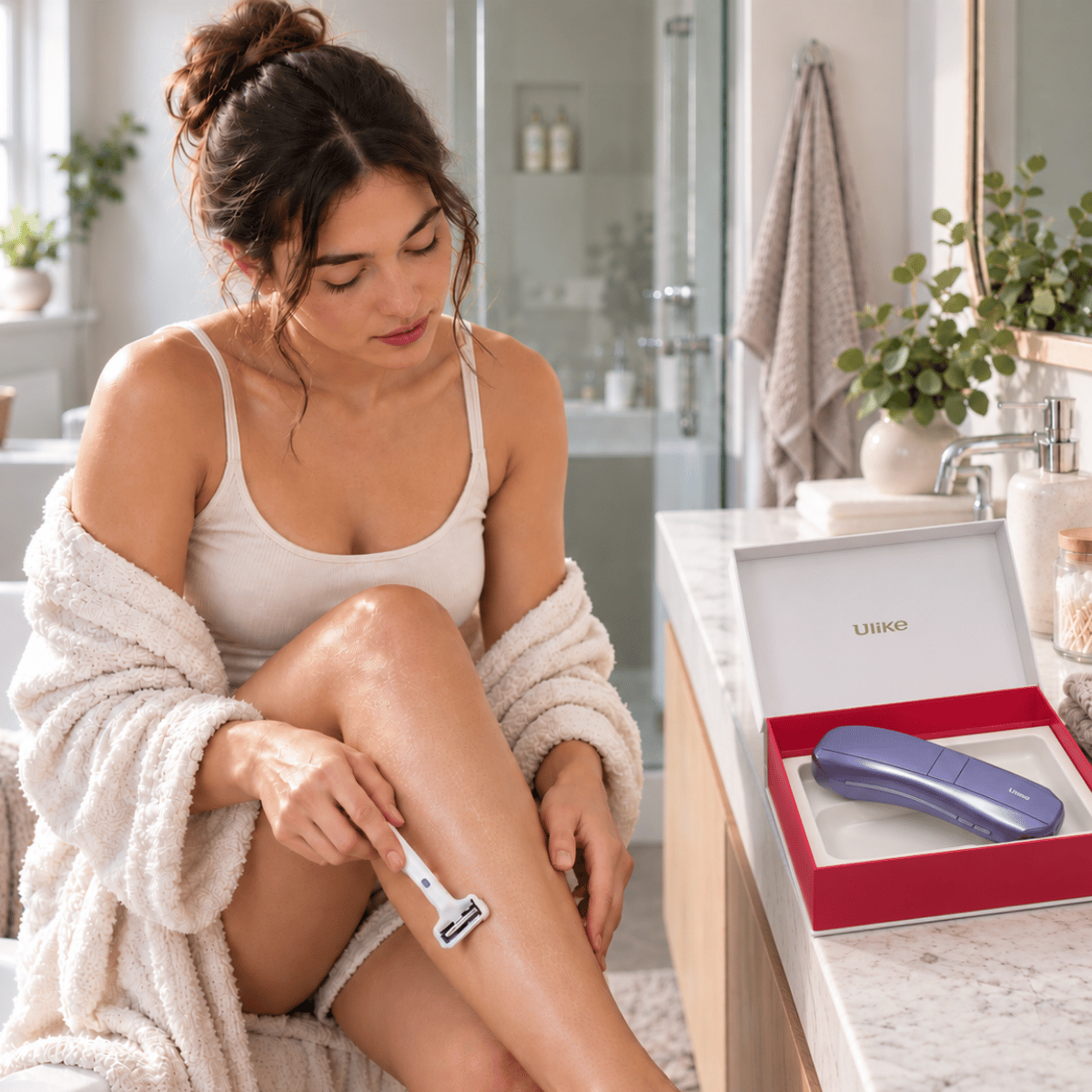
Woman carefully shaving her leg with a clean razor, demonstrating a safe hair removal technique for psoriasis-prone skin

Shaving: The Most Widely Recommended Option and How to Do It Safely

Shaving is the most widely recommended hair removal method for people with psoriasis for straightforward reasons: it does not pull at the skin, does not apply chemical agents, and causes minimal trauma when done correctly. Use a clean, sharp razor because blunt blades drag rather than cut cleanly. Apply a fragrance-free shaving gel or cream as a lubricant. Shave with the direction of hair growth rather than against it, which reduces friction on already reactive skin. Do not shave over active plaques under any circumstances.

Electric Trimmers: Reduced Trauma, Same Convenience

Electric trimmers and clippers cut hair rather than pulling it, which keeps trauma to the skin low. They are a practical option for people who find shaving irritating. Not suitable for use directly over plaques, but generally well-tolerated on clear skin. Full epilators are a different category: these pull hair from the root electrically, and the mechanical pulling action is a documented Koebner trigger. Approach them with considerable caution.

Depilatory Creams: The Patch Test Rule and Which Formulas to Avoid

Depilatory creams dissolve the hair shaft through alkaline chemistry and can work reasonably well for people with psoriasis on areas that are currently clear. The catch is that psoriatic skin can be reactive to the chemical formulas involved, particularly versions with strong fragrances, high concentrations of active agents, or significant preservative loads. Always patch test on a small area of unaffected skin 24 to 48 hours before applying more widely. Avoid products marketed for coarse or resistant hair. Never apply near or over active plaques.

Professional Laser Hair Removal: When It Might Be an Option and What to Ask

Professional laser treatment, delivered by someone trained to assess and adjust based on real-time skin response, offers a safer context for people with psoriasis than at-home devices do. Not automatically suitable, but not automatically ruled out either. 


A practitioner with genuine experience treating clients with psoriasis can evaluate your specific situation, calibrate settings appropriately, and monitor your skin's response over a course of treatment. 


Ask them directly: 

  • Have they treated psoriasis patients before? 
  • What is their protocol for psoriatic skin? 
  • How would they modify settings if they saw a reaction developing? A practitioner who cannot answer these questions clearly is not the right one.

The One Method to Always Avoid: Waxing and Threading

Waxing physically removes hair by applying a mechanical pulling force to the skin. Hot or cold, the mechanism is the same, and it is one of the most well-documented Koebner triggers in the literature on psoriasis. Threading operates on the same pulling principle. Neither method should be used anywhere on the body, not just over active plaques, given that Koebner susceptibility is systemic. This is not a precaution that can be revisited once the skin looks better. It applies regardless of current disease activity.

If You Already Own a Ulike or At-Home IPL Device: What Should You Do?

A significant number of people searching this topic already own a device. This section addresses you specifically.

Do Not Use the Device on or Near Active Lesions or Inflamed Skin

If there is any active psoriasis in or near the area you planned to treat, stop. Do not proceed until the skin has been fully cleared for a meaningful period and you have had a specific conversation with a dermatologist about whether to continue. Treating near a flare, even when the exact spot being treated appears visually clear, carries real risk.

Clear Skin During Remission: A Nuanced Position

If your psoriasis has been in extended, stable remission and you want to use your Ulike device on areas that have been continuously clear, the risk is lower than during an active flare period. It does not disappear. 


Before proceeding, a dermatologist's input on your Koebner history is not optional; it is the deciding factor. Never koebnerised before and currently in prolonged stable remission? That is genuinely relevant information. Koebnerised even once in the past? The calculation changes significantly.

The Patch Test Step That Is Non-Negotiable for Psoriasis Sufferers

If you do proceed with professional guidance, do not skip the patch test regardless of how clear your skin looks. Apply the device's lowest intensity setting to a small area of unaffected skin and wait at least 48 to 72 hours before assessing the response. You are watching for immediate reactions but also for any delayed redness, texture changes, or early lesion activity appearing in the days after. Anything concerning means stop, not pause and monitor.

When to Pause a Treatment Course Mid-Way

New redness or scaling in treated areas, anything resembling a plaque appearing where skin was clear before, increased sensitivity between sessions, or any indication of a wider flare developing are all reasons to stop treatment immediately. Do not continue through these signs in the hope they are temporary. They may not be.

How to Speak to Your Dermatologist Before Making a Decision

Be specific about what you are asking. You are considering at-home IPL, not a professional clinic treatment. That distinction is clinically important because the level of oversight is completely different. Ask about your Koebner history and how they would classify your risk. Ask whether any of your current medications affect how your skin responds to light or heat. 


Ask for their specific view on whether your current disease state and remission history make at-home IPL a reasonable option for you. You can find out if IPL is right for your skin using Ulike's skin suitability guidance as a starting point for that conversation.

How to Approach Hair Removal as Part of a Broader Psoriasis Skincare Routine

Choosing Products and Treatments That Work With Your Condition

The practice of hair removal falls within the scope of an overall skincare regime, which needs to be handled delicately in the presence of psoriasis. Scented products, aggressive exfoliants, and products containing alcohol could all lead to an outbreak on the skin. To avoid exacerbating any pre-existing condition, it is advised to opt for fragrance-free products and those with few ingredients in post-shaving creams and moisturisers.

The Role of Skin Barrier Support in Reducing Flare Risk

A properly functioning skin barrier deals with external irritants more effectively than one that is not. Regular use of an emollient on the affected areas, especially before shaving, can assist in maintaining a protective layer that psoriasis sufferers' skin does not have.


This does not neutralise Koebner risk, but it does reduce overall skin reactivity, and that matters for every method of hair removal you might use. For more on using IPL on sensitive skin, Ulike's guide covers relevant preparation principles for reactive skin types that are worth reading regardless of whether IPL ends up being an option for you.

Building a Hair Removal Routine That Does Not Disrupt Your Treatment Plan

Hair removal timing when using topical treatments like prescribed steroids and calcipotriol is a factor that is less known to the general public than one would think. The use of hair removal products right before or after the application of a topical steroid may have an influence on the effect the treatment has on your skin.


Your dermatologist can advise on appropriate spacing. The same logic applies around phototherapy sessions: hair removal immediately before or after a UVB treatment session is not a good idea.

Seasonal and Flare-Related Timing: Planning Around Your Condition

Many people with psoriasis notice a seasonal pattern, with flares more likely in winter and relative improvement through summer. Whatever hair removal method you use, timing it to your most stable periods reduces the chance of a reaction. Knowing your own flare calendar, the periods when your skin is reliably settled, is genuinely useful information to bring to any conversation about hair removal options, including this one.

Frequently Asked Questions

Can I use an at-home IPL device if my psoriasis is in full remission?

Possibly, but dermatologist input comes first. Full remission reduces the Koebner risk but does not eliminate it, and your personal susceptibility history matters enormously. A dermatologist familiar with your specific pattern of disease will give you far more useful guidance than any general article can. Do not make this call independently

What if I only have psoriasis on my scalp or elbows? Can I use IPL on my legs?

Where your psoriasis currently is does not automatically make your legs a safe treatment area. Koebner susceptibility operates systemically, meaning new lesions can develop anywhere on the body following trauma, including in areas that have no prior history of psoriasis. Whether your legs are genuinely lower risk depends on your Koebner history and your current overall disease activity, not just the location of your visible plaques.

I used IPL before my psoriasis diagnosis. Is it safe to continue?

Your experience before diagnosis is not a reliable reference point for how your skin will respond now. The immune context has changed. A psoriasis diagnosis means the Koebner risk is real and present, and previous positive experiences with IPL do not tell you whether you are susceptible going forward. Have the conversation with a dermatologist before resuming, rather than assuming that what was fine before will remain fine now.

Does the type of psoriasis I have (plaque, guttate, inverse) affect the risk?

To some extent, yes. Plaque psoriasis involves clearly defined, raised lesions that can be physically avoided during a session, though Koebner risk remains. Guttate psoriasis, which tends to appear as scattered small plaques following infection, may be in a different phase of activity than classic plaque disease. Inverse psoriasis affects skin folds, which typically makes IPL on those areas impractical, regardless of other considerations. The type of psoriasis shapes where the most obvious contraindications lie, but Koebner susceptibility is not type-specific.

Are there any IPL devices specifically designed for sensitive or condition-affected skin?

No device currently on the market is designed specifically for psoriasis-affected skin, and claims implying otherwise should be read with considerable scepticism. Some devices, Ulike among them, include features like built-in skin tone sensors and cooling technology that reduce burn risk for sensitive skin in general. Those are meaningful safety features for suitable users. They do not, however, alter the underlying contraindication for psoriasis. 


You can learn more about how Ulike works and review its safety features on the product page, but those details should be considered alongside the psoriasis-specific guidance in this article, not as a substitute for it.

What should I tell a dermatologist before deciding on IPL?

Tell them you are considering at-home IPL specifically, not a professional clinic treatment. The distinction is clinically significant. Give them your full medication list, topical and systemic. Ask directly about your Koebner history. Ask whether they consider your disease currently stable enough to even discuss light-based options. And ask what they believe is the most appropriate hair removal approach for your specific situation right now. That conversation will be more useful than anything you can read online, including this.

Psoriasis management is personal in a way that few chronic conditions match. The decisions around it, even ones as practical as how to remove body hair, rarely reduce to a clean yes or no. If you have been given the go-ahead by a dermatologist and want to understand what at-home IPL actually involves, you can explore the Ulike Air 10 and its skin compatibility features. For everyone else: you now have the questions worth asking and the context to ask them with. That is a better starting point than most people get.

Previous
IPL and Retinol: How to Use Both Safely
Next
Is IPL Safe for Teenagers?
Share:
Woman with psoriasis looking directly at the camera with a calm and considered expression

IPL and Psoriasis: Can You Safely Use an At-Home IPL Device If You Have Psoriasis?

IPL and Psoriasis: For most...
May 26, 2026
hand resting against cheek with soft natural light and subtle skin texture

IPL and Retinol: How to Use Both Safely

IPL and Retinol should not be used together on the same area of skin. Learn safe pause timelines ...
May 24, 2026
Close-up of a woman gently touching her forearm in warm golden light, representing post-IPL skin care.

Sun Protection After IPL: Why SPF 30 Alone Is Not Enough in Summer

Mid-treatment and heading into summer? Here is how long to avoid sun, which SPF to use, and how t...
May 22, 2026

Explore Beauty

Ulike Air 10

2 weeks to silky smooth skin.

96% Hair Density Reduction in 2 Weeks
Ulike Air 3

3 weeks to silky smooth skin.

93% Hair Density Reduction in 4 Weeks
Ulike X

3 weeks to silky smooth skin.

94% hair reduction in just 2 weeks*
Ulike Reglow

Clearer skin in 2 weeks: Fewer breakouts
Smoother skin in 4 weeks: Fewer lines, firmer feel