




Is IPL Safe for Teenagers?

If you're a parent who's just had this conversation with your teenager, or a teenager doing your own research, you probably want a straight answer rather than another article that hedges everything into uselessness.
Is IPL safe for teenagers? IPL can be fine for some teenagers, at the right age, with the right skin and hair type. It's not categorically dangerous. It's also not guaranteed to work well during puberty. Those are two separate things, and both matter.
Is IPL Safe for Teenagers? The Short Answer
IPL is generally considered safe for teenagers aged 16 and over when skin tone and hair colour are compatible. The way it works, light absorbed by melanin in the hair follicle, generating heat that disrupts regrowth, is the same regardless of age. Teenage skin isn't inherently more fragile.
The two things worth knowing upfront: skin tone compatibility is a bigger safety variable than age, and results during active hormonal growth tend to be less predictable than in adults. Safety and effectiveness are different questions. Most content treats them as one.
Why Teenage Bodies Respond Differently to IPL
For an adult, IPL is mostly a practical decision. For a teenager, it rarely feels that simple.
Unwanted body hair during adolescence tends to arrive fast and feel urgent — tied up with confidence, social comparison, and the general experience of your body changing faster than you'd like. That's real, and it's worth acknowledging. Parents researching this are usually coming from a different angle: protective, sceptical, not sure whether a light-based device is appropriate for a 15-year-old.
Both responses make sense. The reason IPL needs more thought for teenagers isn't really about skin sensitivity, it's about the fact that adolescent bodies are still actively developing hair follicles, driven by hormonal shifts that no device can account for. That changes what you can realistically expect from treatment.

What Clinical Research Says About IPL in Under-18s
There isn't a lot of it, but what exists is reasonably reassuring, with caveats worth knowing.
A 2023 systematic review in Lasers in Medical Science (Sharon et al.) looked at laser and IPL treatments in patients under 18, covering 71 patients aged from 9 months to 17 years. No cases of scarring or lasting skin damage were found. Most patients saw significant hair reduction. But recurrence rates were higher in younger patients than in adults, almost certainly because hormonal activity was still driving new follicle growth. And the evidence base is case reports, not large randomised trials. That's an important distinction.
A 2022 study in the Pakistan Armed Forces Medical Journal (Sajid et al.) looked at IPL for acne in 90 patients with a mean age of 18.5. Only 9% had temporary redness; 1% experienced post-inflammatory hyperpigmentation. Young skin, under clinical care, generally tolerates IPL without serious problems.
One thing both studies share is that they involved trained clinicians and calibrated professional devices. Neither tells us directly what happens with a consumer at-home device used by a teenager unsupervised. That gap matters.
At-home vs Clinical IPL: Why the Difference Matters for Under-18s
Most articles blur this distinction entirely, so it's worth being clear about what you're actually comparing.
Feature |
At-Home IPL |
Clinical IPL |
Energy output |
Consumer-safe, fixed lower levels |
Higher, adjustable per patient |
Who operates it |
The user |
Trained practitioner |
Skin tone adjustment |
Built-in sensor blocks incompatible tones |
Manual calibration per session |
Age threshold |
16+ (Ulike recommendation) |
Typically 18+ |
Parental consent |
Advised but not enforced |
Required under 18 |
Risk of hyperpigmentation |
Lower due to reduced energy |
Higher if miscalibrated |
Cost per session |
Lower |
Significantly higher |
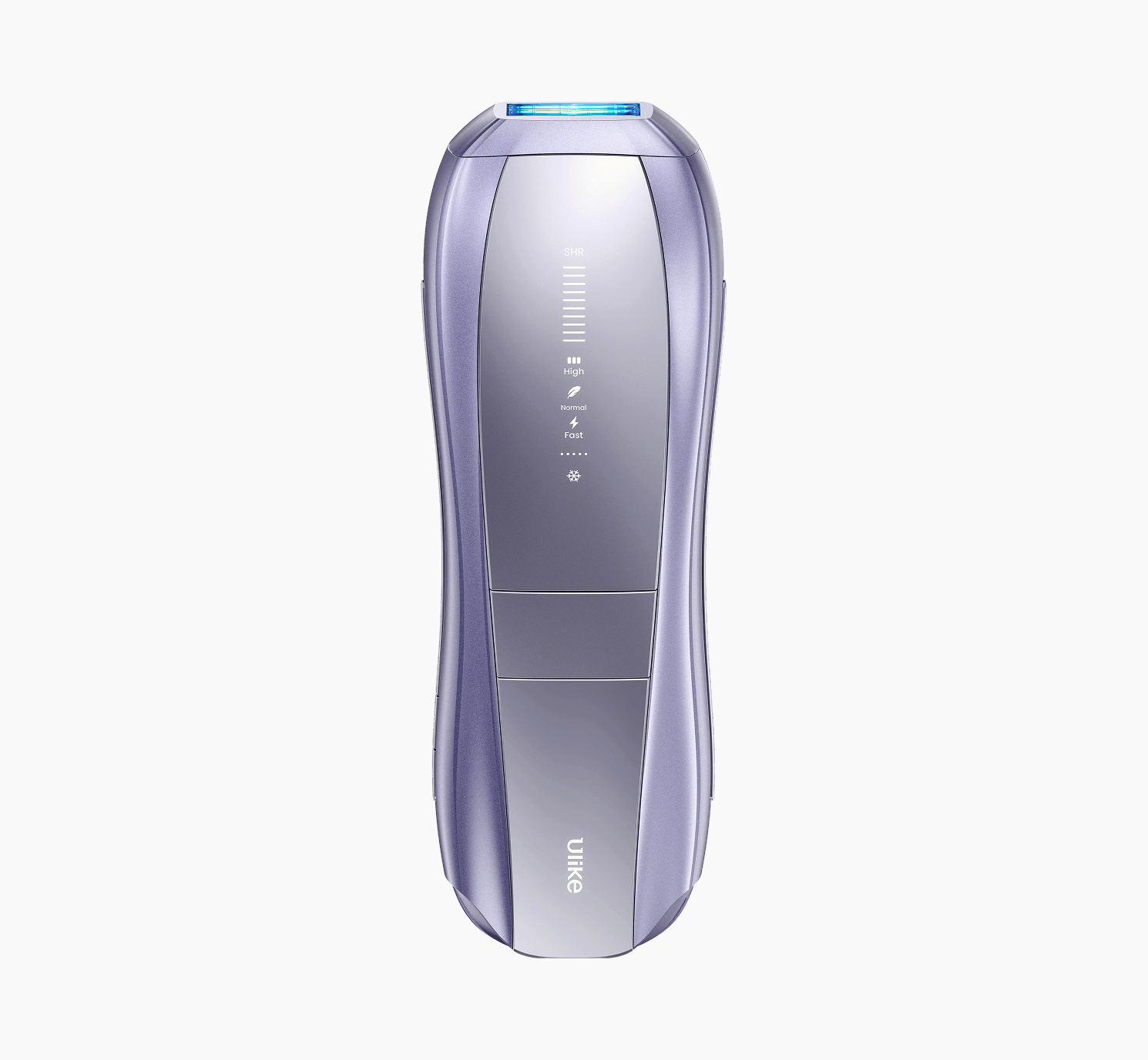
For teenagers, the lower energy ceiling of at-home devices is actually a meaningful safety feature. There's less room for serious error. Ulike devices, for example, include skin-tone sensors and ice-cooling technology and carry UKCA and CE certification. But certification confirms the device meets regulatory standards; it doesn't tell you whether a 15-year-old should be using it. The clinical research on adolescent safety was done in medical settings. Consumer IPL is a different category.
How Puberty Affects IPL Results in Teenagers
This is the part most IPL content ignores, and it's probably the most useful thing to understand.
IPL targets active follicles at the time of treatment. What it can't do is treat follicles that haven't activated yet. During puberty, androgens keep stimulating new follicle activity which means hair that wasn't there when you started a treatment course can appear afterward, and treated areas may regrow faster than they would in an adult whose hormonal profile has settled.
This isn't a device failure. It's biology. A 15 or 16-year-old mid-puberty should expect less consistent results than a 21-year-old. More sessions, more maintenance, some regrowth in cleared areas. By 17, for many teenagers particularly those who entered puberty earlier hormonal patterns are beginning to stabilise and results get closer to what adults experience.

Minimum Age for IPL Hair Removal: What UK Guidelines Actually Say
There's no legal minimum age for IPL in the UK, which means the guidance comes from device manufacturers and clinical practitioners rather than legislation.
Setting |
Minimum Age |
Notes |
At-home devices (Ulike) |
16 |
Based on hormonal development reasoning |
Professional clinics |
Typically 18 |
Partly clinical, partly liability-driven |
Clinical treatment (medical) |
No fixed minimum |
Used in younger patients for conditions like hypertrichosis, under dermatologist supervision |
Under 16, the recommendation is to wait — not because IPL causes definitive harm at 15, but because hormonal activity is still too unpredictable for results to be reliable. A treatment course that keeps getting reset by new follicle growth isn't worth the time or cost. For a broader look, here’s how electrolysis compares if IPL isn’t yet appropriate.
Parental involvement is advisable for anyone under 18, regardless of whether the device allows it or not.
Skin Tone and Hair Colour Compatibility: Why It Matters More Than Age
Age matters, but skin tone compatibility matters more.
IPL targets melanin in the hair follicle. The contrast between hair colour and skin tone determines both effectiveness and safety. Fair to medium skin with naturally dark hair: strongest candidates. Very light, red, or grey hair: insufficient melanin in the follicle for IPL to work, regardless of age.
Deeper skin tones — Fitzpatrick types V and VI — carry a higher risk of post-inflammatory hyperpigmentation because the surrounding skin absorbs more of the light energy.
That melanin-specific risk doesn't care how old you are. A 17-year-old with a Fitzpatrick V complexion faces the same elevated risk as a 35-year-old with the same skin tone. For more on how IPL works across different skin tones, the skin compatibility question is worth reading before starting any course of treatment.
A patch test before any full session isn't optional. It's the one thing that can tell you how your specific skin will actually respond.
How to Use IPL Safely as a Teenager: What to Check First
If age, skin tone, and hair colour all point in the right direction, here's what to do before starting and during treatment.

Before your first session
Age check. At-home devices like Ulike's are recommended for 16 and over. Under 18, make sure a parent is aware and on board.
Compatibility check. Use the device's built-in skin-tone sensor, but also assess hair colour separately. Very light, red, or grey hair won't respond to IPL regardless of what the sensor reads about your skin.
Patch test. Treat a small area and wait 24–48 hours before doing anything more. Redness that fades within a few hours is normal. Prolonged irritation, any blistering, or skin colour change — stop and get advice. Full IPL safety protocol covers the detail.
During your treatment course
Set realistic expectations. During active puberty, plan for more sessions than the standard adult course. Some regrowth is likely — that's biology, not a product problem.
Avoid treating over active acne, moles, tattoos, or broken skin. Teenagers managing active acne alongside unwanted hair need to treat these as firm limits, not rough guidelines.
Sun exposure. Avoid direct sun on treated areas for at least 48 hours after each session. Don't treat recently tanned skin, year-round.
When Teenagers Should See a Dermatologist Before Using IPL
Teenagers with PMOS (formerly PCOS), hirsutism, or other hormonal conditions should talk to a GP or dermatologist before picking up an IPL device. The underlying hormonal driver will keep stimulating hair growth regardless of how many sessions are done — and a dermatologist can assess whether treatment needs to address the cause first, not just the symptom.
Active acne across large areas of skin also complicates IPL. It's not a straightforward "avoid the spots" situation — inflamed skin and light energy need professional assessment. And for anyone under 16 wondering whether to wait, what age works best for laser hair removal covers the broader reasoning.
The honest answer for most teenagers under 16: patience now means better results later.
For the right teenager — 16 or older, compatible skin, realistic expectations about what puberty means for the treatment timeline — IPL is a reasonable option. The biology doesn't work in favour of perfect results mid-adolescence, and that's worth knowing going in. When in doubt, patch test. If there's any hormonal factor in play, get a dermatologist's view first. If you're looking at at-home options, Ulike's devices are built with skin sensors and are recommended for 16 and over.
Frequently Asked Questions: IPL Hair Removal for Teenagers
Can a 16-year-old use IPL?
Most at-home brands set 16 as their minimum. Clinics often require 18, partly for liability reasons. At 16, IPL can work well if skin tone and hair colour are compatible — but expect more sessions than an adult would need during active hormonal growth phases.
Is IPL safe for teenage skin?
A 2023 systematic review covering 71 patients under 18 found no scarring or lasting skin damage from laser and IPL treatments. Skin tone compatibility is a bigger safety variable than age. The studies involved clinical devices, not consumer at-home products
Does IPL work during puberty?
Less consistently than in adults. Androgens keep stimulating new follicle growth during puberty, so treated areas can regrow faster and new hair can appear in cleared areas. It's not a safety issue — it's a results issue.
What's the UK minimum age for IPL?
No legal minimum exists. Clinics typically require 18. At-home devices recommend 16.
Will a teenager need more sessions than an adult?
Usually, yes. Not because their skin responds differently, but because ongoing hormonal activity drives faster regrowth. More maintenance sessions should be expected until growth patterns stabilise.
References
- Sharon E, Levi A, Lapidoth M, Snast I. Laser and light therapy for pediatric hair removal: a systematic review. Lasers Med Sci. 2023;38(1):156. Available from: https://doi.org/10.1007/s10103-023-03821-2
- Sajid F, Rizwan M, Sheikh SS. Efficacy and safety of intense pulsed light in patients of inflammatory acne vulgaris. Pak Armed Forces Med J. 2022;72(6):2201–04. Available from: https://doi.org/10.51253/pafmj.v72i6.7548
Can You Use IPL on Freckles? | Safety & Hair Removal
Can You Use IPL on Your Face Every Day? How Often Should You Use It?
What to Do Between IPL Treatments: Shaving, Exfoliation & Hair Regrowth
Explore Beauty
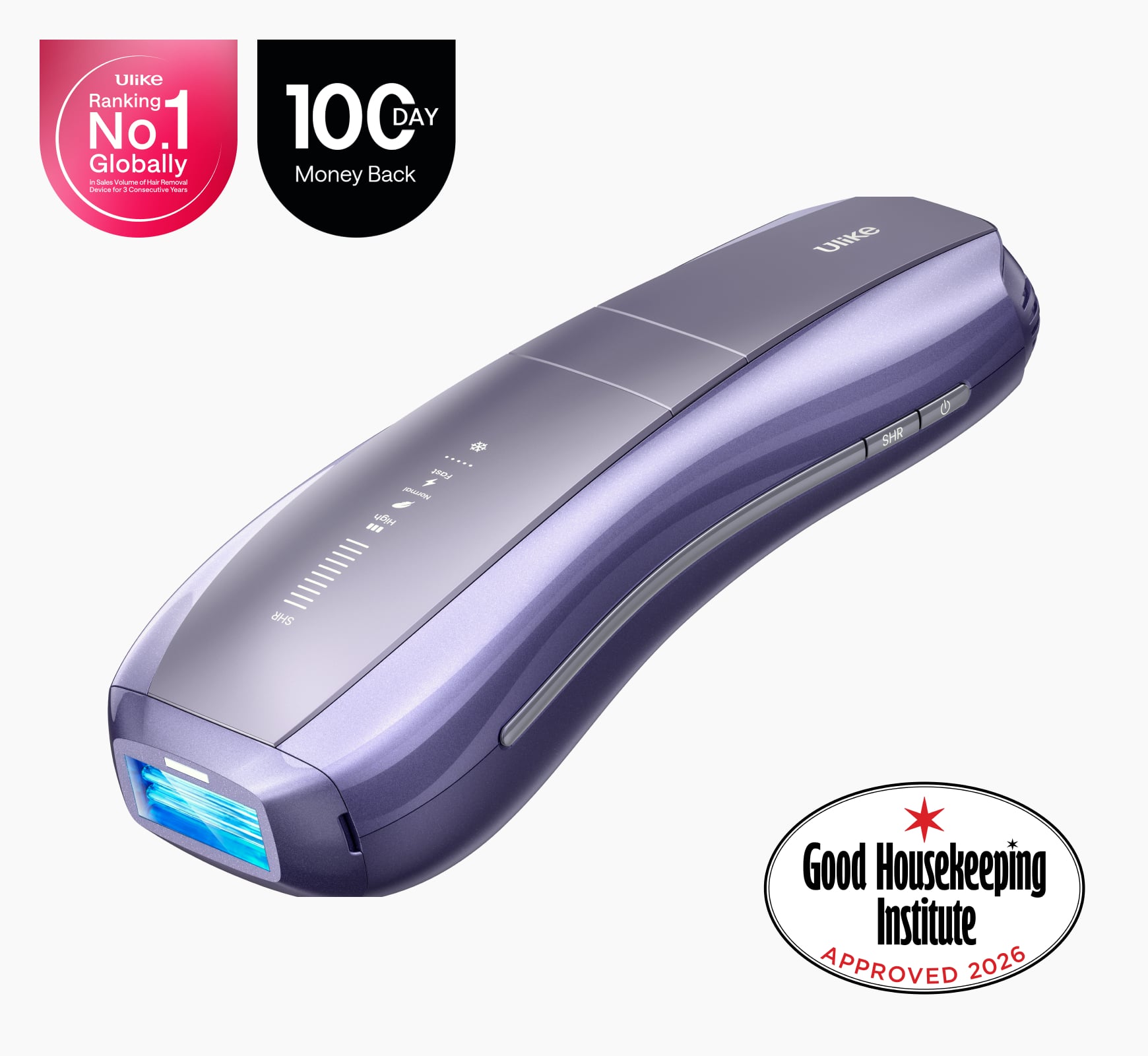
Ulike Air 10
2 weeks to silky smooth skin.
96% Hair Density Reduction in 2 Weeks
Ulike Air 3
3 weeks to silky smooth skin.
93% Hair Density Reduction in 4 Weeks
Ulike X
3 weeks to silky smooth skin.
94% hair reduction in just 2 weeks*
Ulike Reglow
Clearer skin in 2 weeks: Fewer breakouts
Smoother skin in 4 weeks: Fewer lines, firmer feel